

Emotional Breakdown Symptoms
An emotional breakdown is a period of intense emotional distress when a person feels unable to manage their feelings, stress, or daily responsibilities. It is not a formal medical diagnosis, but people commonly use the term to describe feeling mentally and emotionally overwhelmed.
Symptoms can affect emotions, thoughts, physical health, and everyday behavior. They may develop gradually or appear during a particularly stressful period.
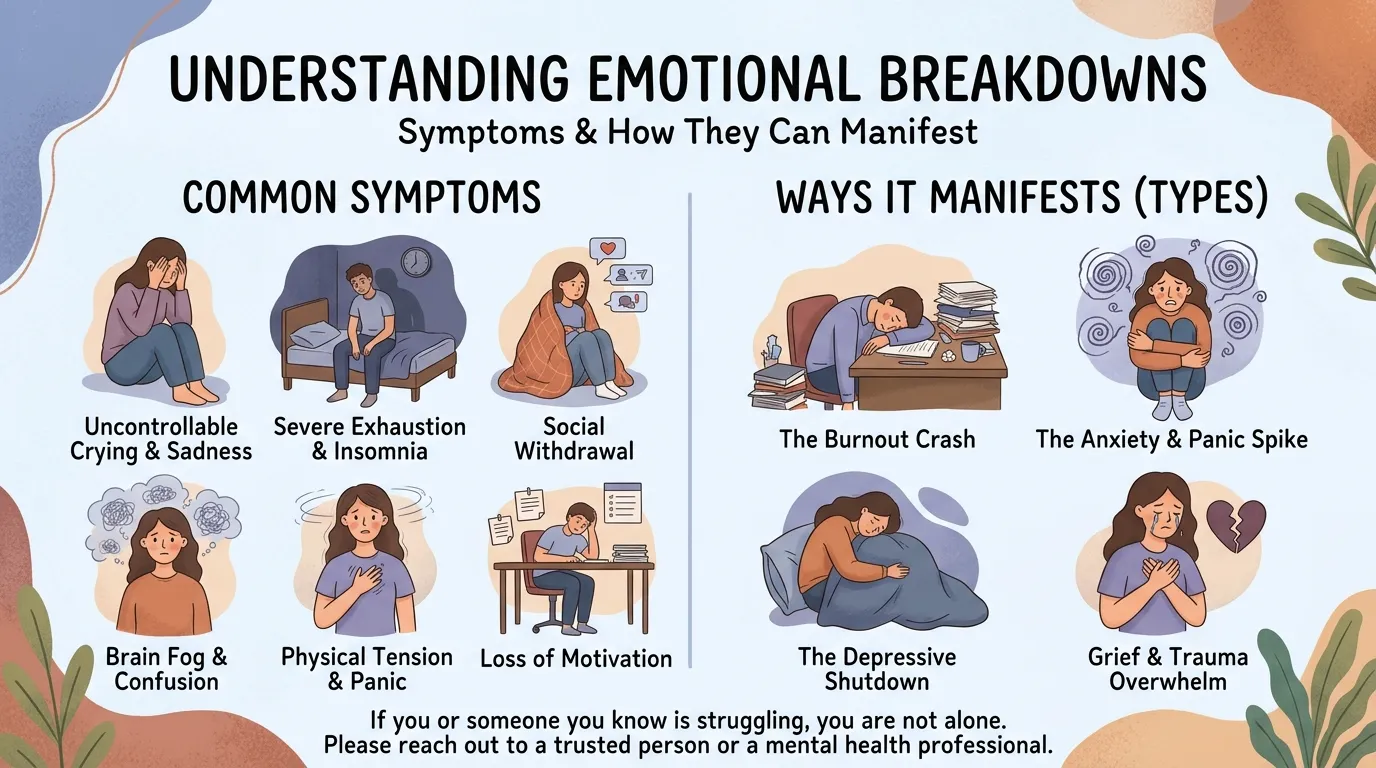
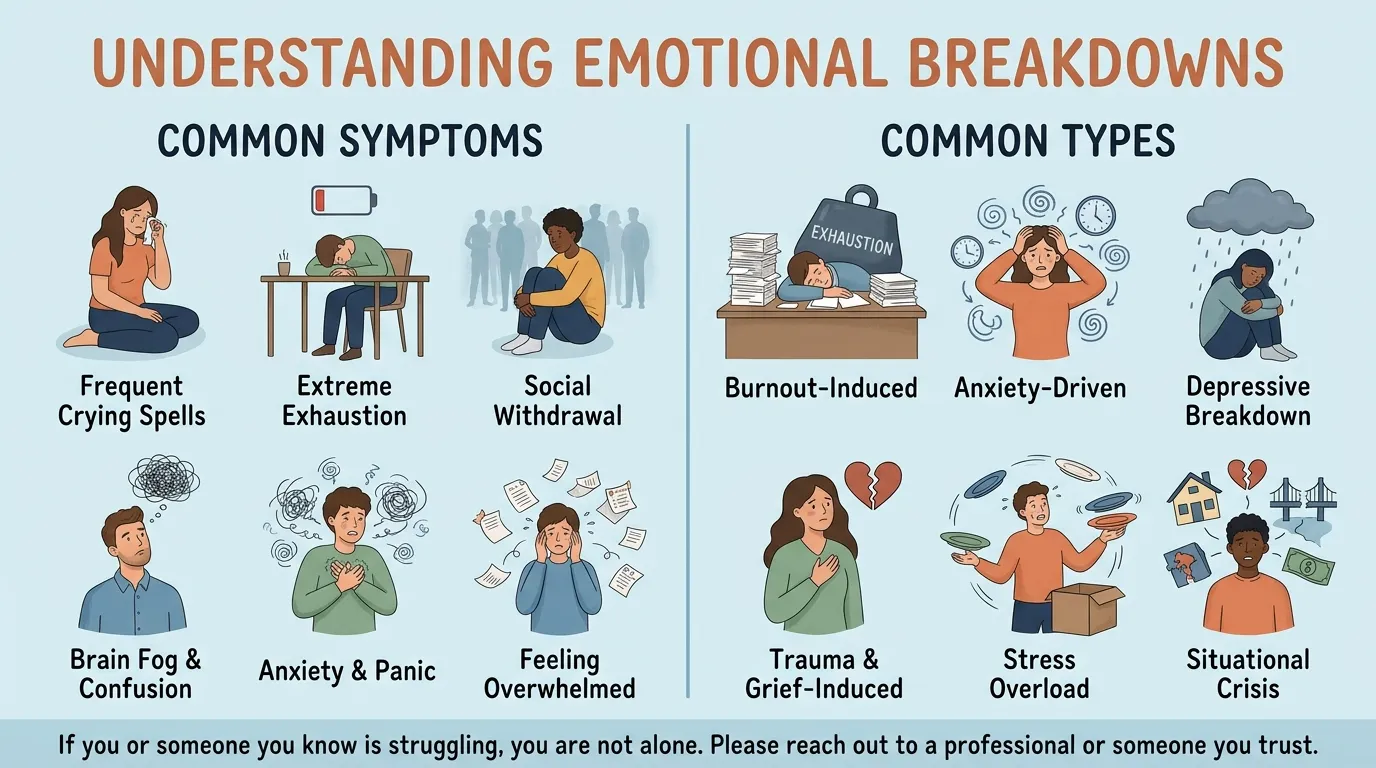
Common emotional breakdown symptoms include:
1. Emotional Symptoms
Frequent crying or feeling unable to stop crying.
Feeling overwhelmed, helpless, or hopeless.
Sudden mood changes or emotional outbursts.
Feeling unusually angry, frustrated, or irritated.
Losing interest in activities you normally enjoy.
Feeling emotionally numb or disconnected.
2. Mental Symptoms
Difficulty concentrating or making decisions.
Racing thoughts or constant worrying.
Feeling unable to handle everyday problems.
Trouble remembering simple things.
Feeling confused or mentally exhausted.
Experiencing intense fear or anxiety.
3. Physical Symptoms
Headaches or muscle tension.
Difficulty sleeping or sleeping too much.
Changes in appetite.
Feeling tired even after resting.
Rapid heartbeat or sweating during periods of anxiety.
Stomach discomfort or digestive problems.
4. Behavioral Symptoms
Avoiding friends, family, or social activities.
Spending more time alone.
Struggling to complete everyday tasks.
Losing motivation to work or study.
Having difficulty maintaining normal routines.
Not everyone experiences the same symptoms. If emotional distress continues, affects daily life, or becomes difficult to manage, speaking with a mental health professional can help.
Types of Emotional Breakdown
There are different ways people experience an emotional breakdown. The term does not describe separate official medical conditions. Instead, it can refer to different reactions to overwhelming stress, anxiety, grief, or other emotional difficulties.
Here are some common forms:
1. Anxiety-Related Breakdown
This happens when fear, worry, or nervousness becomes difficult to manage. A person may experience racing thoughts, panic, restlessness, or a constant feeling that something bad will happen.
2. Depression-Related Breakdown
A person may feel deeply sad, hopeless, empty, or disconnected from others. They may lose interest in activities, struggle with everyday tasks, or have changes in sleep and appetite.
3. Stress-Related Breakdown
Long-term pressure from work, studies, family responsibilities, or financial problems can leave someone feeling emotionally exhausted. Even small challenges may begin to feel impossible.
4. Trauma-Related Breakdown
A painful or frightening experience can lead to intense emotional reactions. Someone may experience fear, frequent crying, disturbing memories, sleep problems, or avoidance of reminders of the event.
5. Grief-Related Breakdown
Losing a loved one or experiencing another major loss can cause overwhelming sadness. A person may cry frequently, feel lonely, struggle to concentrate, or find it difficult to accept what happened.
6. Burnout-Related Breakdown
Long periods of physical and emotional exhaustion can make it difficult to continue working, studying, or caring for others. A person may feel drained, unmotivated, and disconnected from their responsibilities.
These experiences can overlap. A mental health professional can help identify what is causing the distress and recommend appropriate support.
Emotional Breakdown Quotes
Emotional breakdown quotes express the pain, exhaustion, sadness, and vulnerability that someone may experience during a difficult time. They can help people describe feelings that are sometimes hard to explain.
Here are some original emotional breakdown quotes:
“Sometimes the strongest people are the ones silently fighting their hardest battles.”
“I am tired of pretending that everything is okay when my heart feels heavy.”
“Not every tear is a sign of weakness; sometimes it is the release of too much pain.”
“Behind a quiet smile, there may be a thousand feelings waiting to come out.”
“Sometimes the mind needs rest just as much as the body does.”
“I don’t need perfect days; I just need a moment when everything feels lighter.”
“Even the strongest hearts need a safe place to fall apart.”
Some pain cannot be explained with words, only felt in silence.
“It’s okay to pause when life becomes too heavy to carry.”
“Healing begins when you stop hiding your feelings from yourself.”
Short Emotional Breakdown Quotes
“I’m not okay, and that’s okay to admit.”
“Too much pain, too few words.”
“Sometimes silence hides the loudest emotions.”
“My heart needs a little peace.”
“Crying is not the end of my strength.”
“One difficult moment does not define my whole life.”
Causes of Emotional Breakdown
An emotional breakdown can happen when emotional pressure becomes greater than a person’s ability to cope. Sometimes one major event triggers it, while in other cases, stress builds up over weeks, months, or even years.
Common causes include:
1. Long-Term Stress
Constant pressure from work, school, relationships, or family responsibilities can gradually affect emotional well-being.
2. Relationship Problems
Arguments, separation, divorce, betrayal, or feeling unsupported by someone close can cause intense emotional distress.
3. Loss of a Loved One
Grief after the death of a family member, friend, or partner can make it difficult to manage everyday life.
4. Financial Difficulties
Debt, unemployment, unexpected expenses, and financial insecurity can create ongoing worry and emotional pressure.
5. Work or Academic Pressure
Excessive responsibilities, unrealistic expectations, exams, and fear of failure may contribute to emotional exhaustion.
6. Traumatic Experiences
Abuse, violence, accidents, bullying, or other frightening events can affect how a person responds to stress.
7. Lack of Sleep
Poor sleep can make it harder to manage emotions, concentrate, and cope with daily challenges.
8. Social Isolation
Feeling lonely or having no one to talk to can make difficult experiences feel even more overwhelming.
9. Existing Mental Health Conditions
Anxiety disorders, depression, post-traumatic stress disorder (PTSD), and other mental health conditions can contribute to severe emotional distress.
10. Major Life Changes
Moving to a new place, becoming a parent, losing a job, or facing a serious illness can create emotional pressure.
Often, several factors happen together. For example, someone dealing with financial problems, relationship difficulties, and poor sleep may become overwhelmed more quickly.
Emotional Breakdown Treatment
Treatment for an emotional breakdown depends on the person’s symptoms, the reasons behind their distress, and how much their daily life is affected. Since an emotional breakdown is not a formal medical diagnosis, a healthcare professional may assess whether stress, anxiety, depression, trauma, or another condition is involved.
Common treatment and support options include:
1. Psychotherapy
Talking with a psychologist or therapist can help a person understand their feelings, recognize stress triggers, and develop healthier ways to cope.
2. Cognitive Behavioral Therapy (CBT)
CBT helps people identify unhelpful thought patterns and learn practical ways to respond to difficult emotions and stressful situations.
3. Medication
A doctor may recommend medication if an underlying condition, such as depression or an anxiety disorder, requires treatment. Medication should only be used under professional guidance.
4. Improving Sleep Habits
Following a regular sleep schedule, reducing caffeine late in the day, and creating a comfortable sleeping environment may support emotional health.
5. Stress Management
Gentle exercise, breathing exercises, meditation, and relaxing activities can help manage everyday stress.
6. Talking to Someone You Trust
Sharing feelings with a supportive friend, family member, or counselor can reduce isolation and help someone feel understood.
7. Taking a Break
When possible, stepping away from stressful situations and reducing unnecessary responsibilities can provide time to recover.
8. Building a Healthy Routine
Regular meals, physical activity, enough rest, and enjoyable activities can support overall well-being.
When should someone seek professional help?
Consider speaking with a doctor or mental health professional when emotional distress continues, becomes more severe, or interferes with work, relationships, sleep, or daily responsibilities. Severe symptoms lasting two weeks or longer are another reason to seek professional support.
If someone has thoughts of suicide, feels unable to stay safe, or may harm themselves or another person, they need immediate help. Contact local emergency services or go to the nearest emergency department, and involve a trusted person rather than facing the situation alone.
Emotional Meltdown vs. Emotional Breakdown
Emotional meltdown and emotional breakdown are related expressions, but they are often used to describe different experiences. Neither is a formal medical diagnosis.
An emotional meltdown usually describes an intense emotional reaction that happens over a short period. An emotional breakdown generally describes a more serious period of distress that may affect someone’s ability to manage everyday life.
Feature | Emotional Meltdown | Emotional Breakdown |
|---|---|---|
Meaning | A sudden, intense emotional reaction | A period of overwhelming emotional distress |
Duration | Often brief, although it can last longer | May continue over days or weeks |
Common triggers | Frustration, sensory overload, sudden stress | Long-term stress, trauma, grief, or mental health difficulties |
Emotional response | Crying, shouting, anger, or panic | Sadness, anxiety, hopelessness, exhaustion, or emotional numbness |
Daily activities | May become difficult temporarily | May become difficult for an extended period |
Support | Calming strategies and emotional support | May require professional assessment and treatment |
Example of an emotional meltdown:
A student becomes extremely frustrated after struggling with an assignment. They start crying, raise their voice, and find it difficult to calm down.
Example of an emotional breakdown:
An employee experiences months of work pressure, poor sleep, and family problems. Eventually, they feel unable to continue their normal routine and struggle to manage everyday responsibilities.
Which one is more serious?
An emotional breakdown may indicate more prolonged distress, but a meltdown can also be serious. The intensity, duration, underlying cause, and effect on daily life matter more than the label.
Crying Mental Breakdown
A crying mental breakdown is an informal expression used when someone experiences intense emotional distress and cries uncontrollably or repeatedly. It may happen when feelings such as sadness, fear, frustration, grief, or stress become too difficult to manage.
Crying can be one way the body responds to emotional pressure. However, crying alone does not mean someone is having a mental breakdown.
Common signs of a crying mental breakdown include:
Crying for a long time or struggling to stop.
Feeling overwhelmed by sadness or emotional pain.
Experiencing anxiety or panic while crying.
Feeling helpless or unable to manage everyday problems.
Having difficulty speaking or explaining emotions.
Feeling physically exhausted after crying.
Wanting to avoid people or spend time alone.
What can cause a crying mental breakdown?
Several experiences may contribute to intense crying, including:
Losing someone you love.
Experiencing relationship problems.
Dealing with constant stress or pressure.
Feeling lonely or unsupported.
Experiencing anxiety or depression.
Going through a painful or traumatic event.
Feeling emotionally exhausted after a difficult period.
What should you do during a crying episode?
Move to a quiet and comfortable place if possible.
Try slow, gentle breathing without forcing yourself to stop crying.
Drink some water and give yourself time to settle.
Talk to someone you trust if you feel comfortable doing so.
Seek professional support if the episodes happen frequently or affect daily life.
If crying is accompanied by thoughts of self-harm, extreme hopelessness, or an inability to stay safe, seek immediate help.
Crying Breakdown Meaning
A crying breakdown means an episode of intense crying caused by overwhelming emotions or psychological distress. It is a common informal phrase used when someone feels emotionally unable to hold back their tears.
It can happen after a stressful experience, a painful memory, an argument, a personal loss, or a long period of emotional pressure.
Examples of a crying breakdown:
A person starts crying after trying to hide their sadness for several weeks.
Someone breaks down in tears after receiving painful news.
A student cries because academic pressure has become overwhelming.
A person cries after an argument with someone they deeply care about.
Someone who has experienced a loss suddenly becomes overwhelmed by grief.
Example sentences:
She had a crying breakdown after hearing the heartbreaking news.
He experienced an emotional crying breakdown after months of stress.
Sometimes, a crying breakdown happens when people have been holding in their feelings for too long.
She called her best friend after a crying breakdown because she needed emotional support.
Is a crying breakdown normal?
Crying is a normal human response to many emotions. It does not automatically mean that someone has a mental health condition or is weak. However, frequent uncontrollable crying, persistent sadness, or difficulty functioning may be signs that someone needs additional support.
What Does Emotional Breakdown Mean?
An emotional breakdown is a period of intense emotional distress during which a person struggles to cope with feelings or manage everyday activities. It may result from prolonged stress, grief, relationship problems, or several overwhelming situations occurring together.
The phrase combines emotional, relating to feelings, and breakdown, meaning a failure to function normally. It is an everyday expression, not a formal medical diagnosis.
Quick Definition Box
Part of speech: Noun phrase
Primary definition: A period of intense emotional distress that makes coping difficult.
Secondary meanings: Emotional overwhelm, a sudden release of feelings, or difficulty managing stress.
Pronunciation: ih-MOH-shuh-nuhl BRAYK-down
Synonyms: Emotional collapse, emotional crisis, emotional overwhelm, mental breakdown.
The Deeper Meaning and Nuance of Emotional Breakdown
An emotional breakdown generally suggests more than ordinary sadness or temporary frustration. It describes a situation in which emotions become difficult to manage, sometimes affecting relationships, concentration, work, or daily responsibilities.
In casual conversation, the phrase may describe crying after a difficult day. In a more serious context, it can refer to distress that develops after prolonged pressure or a major personal loss.
For example, imagine a glass filling with water. Each stressful experience adds another drop until the glass overflows. Similarly, a seemingly small problem may trigger an intense emotional reaction when a person has already been carrying significant stress.
The expression does not necessarily indicate a mental health disorder. Its meaning depends on the person’s circumstances and the severity of their symptoms.
How to Use Emotional Breakdown in a Sentence
[Formal] The prolonged stress contributed to an emotional breakdown that affected her daily responsibilities.
[Casual] I had an emotional breakdown after a really difficult day.
[Professional] The employee took time off after experiencing severe emotional distress.
[Relationship] Their repeated arguments eventually led to an emotional breakdown.
[Literary] Years of hidden sadness finally culminated in an emotional breakdown.
[Conversational] She felt close to an emotional breakdown because everything seemed overwhelming.
[Academic] Prolonged stress can contribute to emotional distress and difficulty coping.
[Personal] He experienced an emotional breakdown after losing someone he loved.
[Common usage] She was afraid she might have an emotional breakdown if the pressure continued.
[Supportive] Having an emotional breakdown does not mean that someone is weak.
Different Ways to Say Emotional Breakdown (Synonyms & Alternatives)
Exact or Strong Synonyms
Emotional collapse: Suggests a serious inability to cope emotionally.
Emotional crisis: Describes a particularly difficult period when support may be needed.
Mental breakdown: An informal expression for severe psychological distress.
Nervous breakdown: A traditional expression for overwhelming stress that interferes with normal functioning.
Formal or Academic Alternatives
Psychological distress: A broad term for difficult mental and emotional experiences.
Acute emotional distress: Emphasizes intense distress occurring over a relatively short period.
Emotional dysregulation: Describes difficulty managing emotional reactions.
Stress-related impairment: Focuses on the effect of stress on everyday functioning.
Casual or Informal Alternatives
Feeling overwhelmed: Feeling unable to manage current demands.
Falling apart: Informally describing difficulty coping with emotions or circumstances.
Having a meltdown: Experiencing an intense emotional reaction.
Hitting a breaking point: Reaching the limit of one’s ability to tolerate pressure.
Powerful or Intense Alternatives
Emotional devastation: Profound emotional pain, often following a major loss.
Psychological crisis: A serious period of psychological distress.
Emotional upheaval: Intense emotional change or turmoil.
Emotional exhaustion: Feeling emotionally depleted after prolonged demands.
Milder or Softened Alternatives
Emotional overwhelm: Feelings becoming difficult to manage.
Emotional strain: Pressure that accumulates over time.
Feeling emotionally drained: Having little emotional energy remaining.
A difficult emotional period: A gentle, neutral description of ongoing distress.
Antonyms and Contrasting Concepts
Emotional stability: Maintaining or regaining a relatively steady emotional state.
Emotional resilience: Adapting to challenges and recovering from setbacks.
Composure: Remaining outwardly calm during a difficult situation.
Emotional regulation: Managing emotional responses effectively.
Equanimity: Maintaining mental calmness and balance.
Emotional Breakdown in Context: Common Phrases and Collocations
Have an emotional breakdown: Experience intense emotional distress.
Experience an emotional breakdown: A slightly more formal way to describe the experience.
Suffer an emotional breakdown: Emphasizes the distress involved.
On the verge of an emotional breakdown: Feeling close to one’s emotional limit.
Recover from an emotional breakdown: Regain stability after a difficult period.
Trigger an emotional breakdown: Contribute to an intense episode of distress.
Prevent an emotional breakdown: Take steps to reduce overwhelming stress and seek appropriate support.
When to Use Emotional Breakdown vs. Its Synonyms
Expression | When to use it |
|---|---|
Emotional breakdown | General description of intense emotional distress. |
Emotional exhaustion | When prolonged demands leave someone feeling depleted. |
Emotional crisis | When emphasizing a serious situation requiring support. |
Emotional overwhelm | When someone feels unable to manage current pressures. |
Mental breakdown | In informal conversation about severe psychological distress. |
Emotional devastation | When emphasizing profound pain following a major loss. |
Emotional dysregulation | When describing difficulty managing emotional reactions. |
Related Concepts and Semantic Network
Emotional exhaustion: Feeling depleted after prolonged emotional demands.
Burnout: Exhaustion and reduced effectiveness associated particularly with chronic workplace stress.
Anxiety: Feelings of worry, fear, or apprehension that may contribute to emotional distress.
Emotional regulation: The ability to recognize and manage emotional responses.
Resilience: The capacity to adapt to adversity and recover after setbacks.