
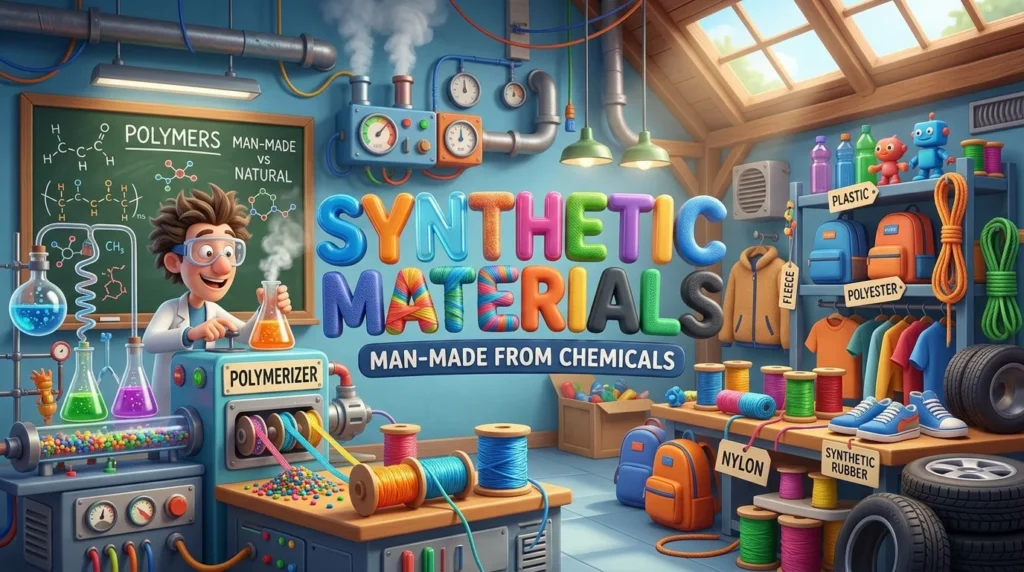
What Does Synthetic Material Mean?
A synthetic material is a human-made substance produced through chemical reactions, industrial processing, or other manufacturing methods. Unlike natural materials such as cotton, wool, wood, and natural rubber, synthetic materials are deliberately created or substantially transformed to achieve particular properties.
Many synthetic materials are made from polymers, which are large molecules formed from repeating chemical units. Manufacturers can control aspects of these materials to influence their strength, texture, flexibility, resistance to heat, and other characteristics.
For example, polyester is a synthetic fiber widely used in clothing because it resists wrinkles and dries relatively quickly. Nylon is another synthetic material known for its strength and abrasion resistance. Synthetic rubber is engineered for products such as tires, seals, and hoses.
However, not every manufactured material is fully synthetic. Some materials are natural substances that have been processed, while others combine natural and synthetic components.
Quick Definition Box
| Feature | Explanation |
|---|---|
| Term | Synthetic material |
| Part of speech | Noun phrase |
| Simple definition | A material made by humans, typically through chemical or industrial processes |
| Main characteristic | Manufactured to achieve specific properties |
| Common examples | Polyester, nylon, acrylic, synthetic rubber, many plastics |
| Common uses | Clothing, packaging, buildings, vehicles, electronics, medical products |
| Related term | Artificial material |
| Opposite or contrast | Natural material, although some products combine both |
What Does Synthetic Mean in Simple Words?
In simple words, synthetic means made by humans rather than occurring naturally in the same finished form.
A synthetic fabric, for instance, is manufactured from processed chemical ingredients rather than spun directly from naturally grown cotton or harvested wool. The word does not automatically mean that something is harmful, cheap, or poor quality. It describes how a material is produced, not whether it is safe or effective.
How Are Synthetic Materials Made?
Synthetic materials are produced using different manufacturing methods depending on the intended product. Many are created through chemical reactions that join smaller molecules into larger structures.
1. Selecting Raw Materials
Manufacturers first choose the ingredients needed to produce the desired material. These may include petroleum-derived chemicals, natural gas derivatives, minerals, or plant-based chemical feedstocks.
For example, conventional polyester is commonly made from chemicals derived from fossil resources. Some newer polyester products use renewable or recycled feedstocks, depending on the manufacturing process.
2. Chemical Processing
Many synthetic materials are created through processes such as polymerization, in which small molecules called monomers react to form larger molecules called polymers.
The resulting polymer may have properties suited to a particular application. Different chemical structures and manufacturing conditions can produce materials that are rigid, elastic, lightweight, or resistant to certain chemicals.
3. Shaping the Material
Once produced, the material is formed into a useful shape. Depending on the substance, manufacturers may use extrusion, molding, spinning, coating, or other industrial techniques.
For example, synthetic fibers can be spun into fine strands, while plastic polymers can be molded into containers, automotive parts, or electronic housings.
4. Finishing and Quality Control
The material may receive additional treatments to improve its color, texture, strength, water resistance, or resistance to wear. Manufacturers then test whether it meets the required specifications.
The final result is a material designed for a particular purpose, such as waterproof outdoor clothing, flexible packaging, or durable vehicle components.
Types of Synthetic Materials
Synthetic materials include several broad categories. Each type has different properties, making it suitable for specific applications.
1. Synthetic Fibers
Synthetic fibers are manufactured strands used to make textiles, ropes, carpets, upholstery, and technical fabrics.
Common examples include:
Polyester: Used in shirts, jackets, bedding, curtains, and sportswear because it is durable and generally wrinkle-resistant.
Nylon: Used in stockings, backpacks, ropes, carpets, and outdoor equipment because of its strength and abrasion resistance.
Acrylic: Often used in sweaters, blankets, and other textiles as a lightweight alternative to wool.
Spandex: A highly elastic synthetic fiber used in stretch clothing, swimwear, and sportswear.
Synthetic fibers can be engineered for particular textures, weights, and performance needs. However, some shed tiny fibers during washing and use, contributing to microfiber pollution.
2. Synthetic Plastics
Synthetic plastics are widely used because they can be shaped into many forms and manufactured with a broad range of properties.
Examples include:
Polyethylene (PE): Common in bags, bottles, films, and containers.
Polypropylene (PP): Used in food containers, household products, packaging, and automotive components.
Polyvinyl chloride (PVC): Used in pipes, cable insulation, flooring, and selected building products.
Polystyrene (PS): Used in some packaging, insulation, and disposable products.
Polycarbonate (PC): Used in certain protective glazing, equipment housings, and durable transparent products.
Not all plastics have the same safety profile or environmental impact. Their suitability depends on their composition, additives, application, and disposal method.
3. Synthetic Rubber
Synthetic rubber is manufactured to provide elasticity and other useful properties. Different formulations can be designed to resist heat, oil, weathering, or repeated mechanical stress.
Examples include:
Styrene-butadiene rubber (SBR): Commonly used in vehicle tires and various rubber goods.
Nitrile rubber (NBR): Used in oil-resistant seals, hoses, and certain protective gloves.
Neoprene: Used in wetsuits, gaskets, and protective products requiring flexibility and resistance to environmental exposure.
Silicone rubber: Used in seals, kitchenware, medical applications, and components that need flexibility across a broad temperature range.
Synthetic rubber is especially important where manufacturers need consistent performance under demanding conditions.
4. Synthetic Resins
Synthetic resins are manufactured substances used in adhesives, coatings, composites, and molded products.
Common examples include epoxy resin, polyester resin, and polyurethane-based systems.
Epoxy resins are often used in strong adhesives and protective coatings. Polyester resins are common in fiberglass-reinforced products, while polyurethane materials appear in foams, coatings, sealants, and other applications.
Their properties depend on the chemical formulation and curing process.
5. Synthetic Foams
Synthetic foams contain a structure with many small gas-filled spaces, making them useful for cushioning, insulation, and impact absorption.
Examples include polyurethane foam in furniture and mattresses, polystyrene foam in some insulation products, and polyethylene foam in protective packaging.
These materials can be lightweight and effective insulators, although their environmental performance depends on production, durability, reuse, and end-of-life treatment.
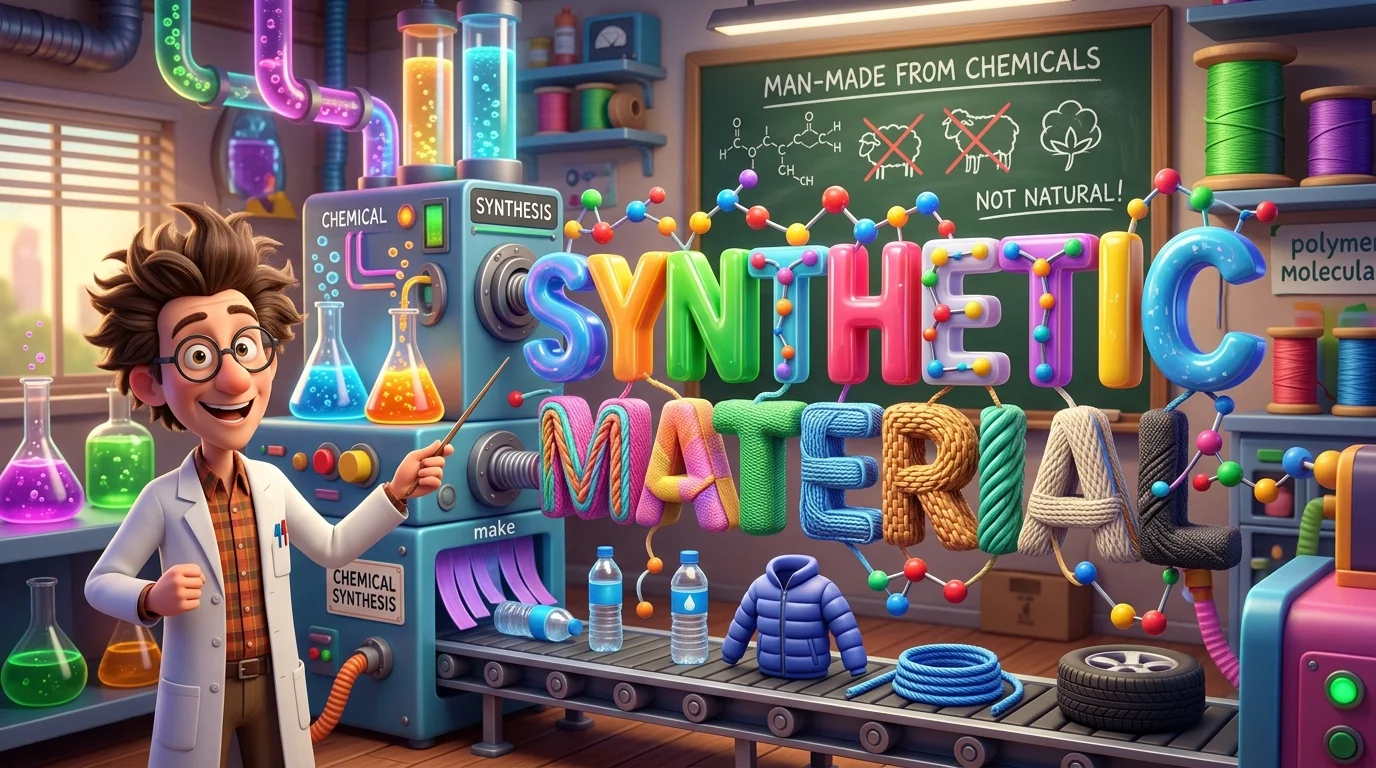
Examples of Synthetic Materials in Everyday Life
Synthetic materials are present in many products people use every day. Their properties often make products more affordable, durable, lightweight, or easier to manufacture.
| Everyday Item | Synthetic Material | Why It Is Used |
|---|---|---|
| Sports shirt | Polyester | Lightweight, durable, quick-drying |
| Backpack | Nylon or polyester | Strength and abrasion resistance |
| Food container | Polypropylene or polyethylene | Shapeability and practical durability |
| Car tire | Synthetic rubber blends | Traction, flexibility, and wear resistance |
| Electrical cable | PVC or other polymer insulation | Electrical insulation and protection |
| Mattress | Polyurethane foam | Cushioning and comfort |
| Protective helmet components | Engineered polymers or foams | Impact management and lightweight construction |
| Waterproof jacket | Synthetic fabrics or polymer membranes | Protection against rain and wind |
| Adhesive | Synthetic resin | Bonding strength and controlled curing |
| Medical tubing | Application-specific polymers | Flexibility and suitability for intended medical use |
These examples illustrate why synthetic materials are common across industries. The best material depends on the product’s function, expected lifespan, cost, and safety requirements.
Natural Materials vs. Synthetic Materials
The main difference between natural and synthetic materials is their origin and method of production. Natural materials are obtained from plants, animals, or geological sources, while synthetic materials are manufactured through chemical or industrial processes.
| Feature | Natural Materials | Synthetic Materials |
|---|---|---|
| Origin | Obtained from nature | Manufactured or chemically synthesized |
| Examples | Cotton, wool, wood, silk | Polyester, nylon, acrylic |
| Consistency | May vary with growing or harvesting conditions | Can often be produced with more controlled specifications |
| Customization | Limited by natural properties and processing | Often engineered for specific performance needs |
| Durability | Depends on the material and treatment | Can be designed for high durability |
| Environmental impact | Depends on farming, extraction, processing, and disposal | Depends on feedstocks, energy, additives, durability, and disposal |
| Biodegradability | Some natural materials biodegrade readily; others do not | Many conventional synthetics persist, though some are designed to biodegrade under specific conditions |
Is Synthetic Better Than Natural?
Neither category is automatically better. Synthetic materials may be more resistant to moisture, wear, or stretching, while natural materials may offer particular advantages in breathability, comfort, or renewable sourcing.
For example, polyester often dries faster than cotton, but cotton may feel more comfortable to some people in certain conditions. Natural rubber and synthetic rubber also have different strengths and limitations depending on the application.
The best choice depends on the intended use rather than whether a material is natural or synthetic.
Advantages of Synthetic Materials
Synthetic materials have become essential because they offer a wide range of controllable properties.
Durability and Strength
Many synthetic materials resist tearing, abrasion, impact, or repeated use. Nylon, for example, is useful for ropes and bags because it can withstand substantial mechanical stress.
Lightweight Construction
Some synthetic materials provide strength without adding much weight. This is useful in transportation, protective equipment, packaging, and portable electronics.
Design Flexibility
Manufacturers can develop materials with specific colors, textures, shapes, and performance characteristics. This flexibility supports products that would be difficult or expensive to make from certain natural materials.
Resistance to Moisture and Chemicals
Some synthetic polymers resist water, oils, acids, or other chemicals. This makes them useful for protective clothing, industrial components, pipes, and storage containers, although resistance varies by formulation.
Cost and Consistent Production
Industrial production can make some synthetic materials relatively affordable and consistent. This helps manufacturers produce large quantities of textiles, packaging, and components with predictable specifications.
Disadvantages of Synthetic Materials
Despite their advantages, synthetic materials can create environmental, health, and disposal challenges.
Environmental Pollution
Many conventional synthetic materials do not readily biodegrade in ordinary environmental conditions. Plastic waste can persist for long periods and fragment into smaller pieces, including microplastics.
Poor waste management can allow synthetic materials to enter rivers, oceans, soil, and other environments.
Dependence on Fossil Resources
Many widely used synthetic polymers are made from petroleum- or natural-gas-derived feedstocks. Extracting and processing these resources can contribute to greenhouse gas emissions and other environmental impacts.
However, some synthetic materials use recycled or renewable feedstocks, and their overall impact varies.
Microfiber Shedding
Synthetic textiles such as polyester, nylon, and acrylic can release tiny fibers during washing, drying, and everyday wear. The amount depends on the fabric, garment construction, age, and care practices.
Heat Sensitivity
Some synthetic materials soften, melt, or lose strength when exposed to high temperatures. Their heat resistance varies widely, so products must be selected according to their intended conditions.
Recycling Challenges
Certain synthetic materials are easier to recycle than others. Mixed-material products, additives, contamination, and the variety of polymer types can complicate recycling processes.
A material’s recyclability also depends on local collection systems and the availability of suitable recycling facilities.
Are Synthetic Materials Safe?
Synthetic materials are not inherently unsafe. Safety depends on the specific substance, chemical formulation, manufacturing quality, exposure conditions, and intended use.
For example, a polymer designed for food contact must meet the relevant requirements for that application. A material used in medical equipment may need to satisfy additional standards for biocompatibility, sterilization, or performance.
Problems can arise from unsuitable additives, chemical residues, overheating, degradation, or using a product outside its intended purpose. A synthetic material that is appropriate for one application may not be suitable for another.
To make informed choices:
Check product labels and manufacturer guidance.
Use materials according to their intended purpose.
Follow temperature limits for food containers and household products.
Choose products that meet relevant safety standards.
Seek appropriate professional advice when dealing with specialized industrial or medical materials.
The word synthetic alone does not tell you whether a product is safe, toxic, sustainable, or suitable for a particular use.

Synthetic Material Meaning in Different Contexts
The term can carry slightly different emphasis depending on the subject being discussed.
In Clothing and Textiles
In fashion, synthetic material usually refers to manufactured fibers such as polyester, nylon, acrylic, or spandex. These fibers can provide stretch, durability, wrinkle resistance, or quick-drying performance.
A garment labeled “100% polyester” is made entirely from that listed fiber, although dyes, finishes, fasteners, and other components may use different materials.
In Construction
Synthetic materials include engineered insulation, polymer pipes, sealants, adhesives, coatings, and composite components. Their use often depends on strength, weather resistance, insulation performance, or ease of installation.
In Manufacturing
Manufacturers use synthetic materials to create components with predictable properties and dimensions. Plastics, resins, synthetic rubber, and specialized polymers can be tailored for machinery, vehicles, appliances, and industrial equipment.
In Science and Chemistry
In chemistry, synthetic generally describes a substance produced through deliberate chemical synthesis. A synthetic compound may be chemically identical to a naturally occurring substance or may have a structure not commonly found in nature.
This means that synthetic does not always mean a material has no natural counterpart.
Synthetic Material vs. Artificial Material
The words synthetic and artificial are often used interchangeably, but they can carry slightly different emphasis.
Synthetic material commonly suggests that a substance has been produced through chemical synthesis or engineered manufacturing. Artificial material is a broader everyday term for something made by humans rather than naturally occurring in the same form.
For example, nylon is commonly described as a synthetic material because it is manufactured through chemical processes. Artificial leather is a broader product description that may refer to different constructions, such as a textile base coated with a synthetic polymer.
The exact distinction depends on the industry and context. Neither word automatically indicates quality, safety, or environmental performance.
Related Concepts and Semantic Network
Understanding synthetic materials becomes easier when you connect the term to related ideas.
[link: Natural material meaning] — Explains substances obtained from natural sources, such as wood, cotton, and wool.
[link: Polymer meaning] — Describes large molecules made of repeating chemical units, which form the basis of many synthetic materials.
[link: Synthetic fiber meaning] — Focuses on manufactured fibers used in textiles, clothing, and technical applications.
[link: Biodegradable material meaning] — Explains materials that microorganisms can break down under suitable conditions.
[link: Recycled material meaning] — Covers materials recovered and processed for use in new products.
[link: Plastic meaning] — Explains a broad family of polymer-based materials that can be shaped during manufacturing.
[link: Composite material meaning] — Describes materials made by combining two or more distinct components to achieve useful properties.
These concepts are related but not identical. For example, a synthetic material can be recyclable, a natural material can be chemically processed, and a composite can contain both synthetic and natural components.