
What Does Preposterous Behavior Mean?
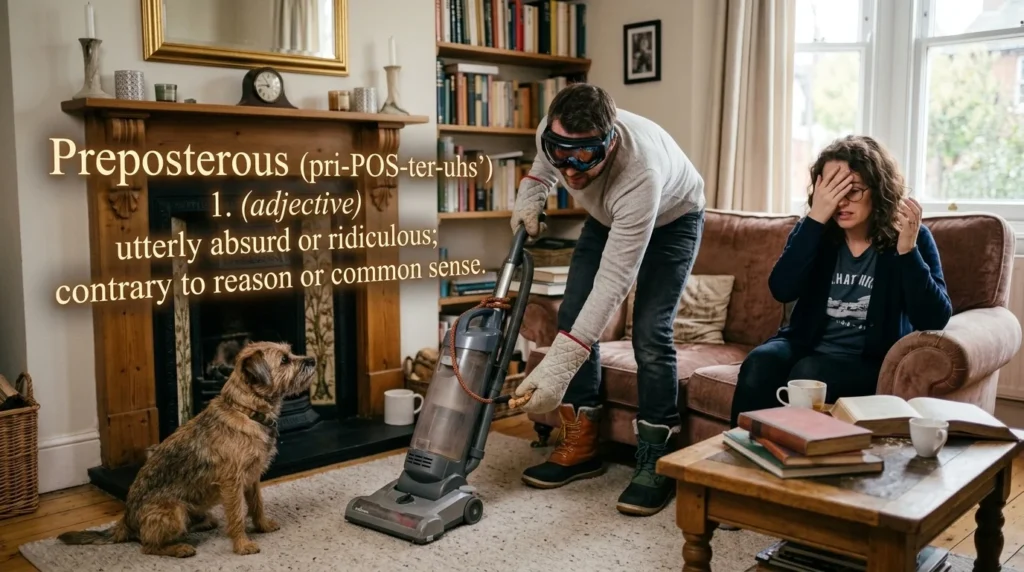
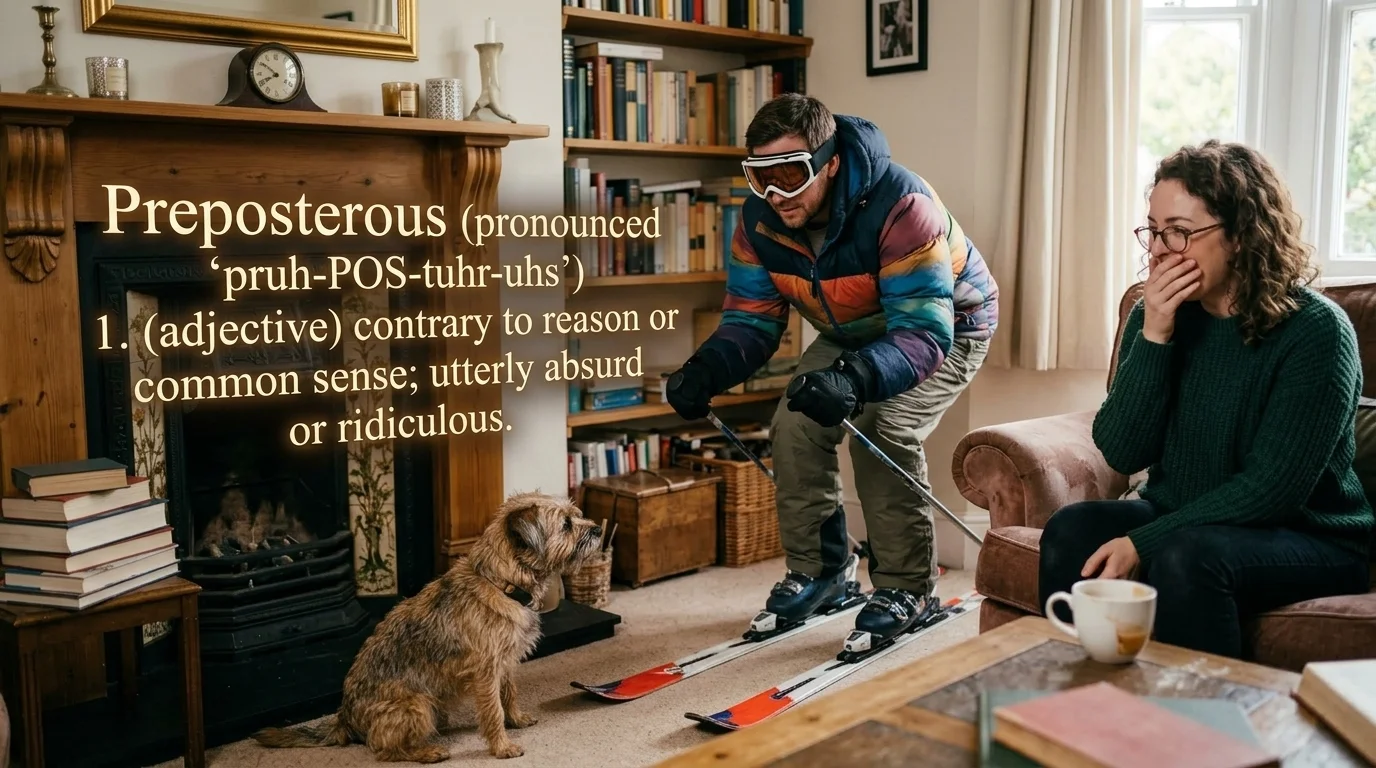
Preposterous behavior means conduct that is extremely unreasonable, absurd, ridiculous, or contrary to common sense.
For example, if someone demands that an employee work 24 hours without a break for no legitimate reason, another person might describe that demand as preposterous behavior because it is unreasonable and excessive.
Quick Definition Box
- Part of speech: Noun phrase
- Primary definition: Behavior that is extremely unreasonable, absurd, or ridiculous.
- Preposterous: Absurdly unreasonable or contrary to common sense.
- Behavior: The way a person acts or conducts themselves.
- Tone: Usually critical; sometimes humorous or sarcastic
- Semantic field: Absurdity, irrationality, unreasonable conduct, foolishness, criticism
What Does “Preposterous” Mean?
Preposterous means so unreasonable or absurd that it seems ridiculous or impossible to take seriously.
The word can describe an idea, claim, demand, situation, decision, or behavior.
For example:
- a preposterous claim
- a preposterous demand
- a preposterous idea
- a preposterous excuse
- preposterous behavior
When applied to behavior, the word focuses specifically on how someone acts.
The Deeper Meaning and Nuance of Preposterous Behavior
The phrase carries more emotional force than a neutral description such as unusual behavior.
If behavior is unusual, it is simply different from what is normal or expected. If it is preposterous, the speaker is making a judgment that the behavior is unreasonable, absurd, or ridiculous.
Preposterous Behavior Implies a Lack of Common Sense
A central feature of preposterous behavior is the apparent absence of reasonable judgment.
For example, someone who refuses to carry an umbrella during a severe storm because they believe rain cannot possibly make them wet might be described humorously as behaving preposterously.
The issue is not merely that the person is behaving differently. Their action appears irrational given the circumstances.
The Phrase Is Usually Critical
Calling someone’s conduct preposterous normally expresses disapproval.
Consider:
“His preposterous behavior disrupted the entire meeting.”
This tells the reader that the behavior was not simply unusual. The speaker considers it unreasonable enough to cause a problem.
Preposterous Can Be Humorous
The word can also be used playfully.
For example:
“Wearing a tuxedo to buy a loaf of bread was preposterous behavior.”
The speaker may not be seriously angry. Instead, preposterous emphasizes how comically excessive the action seems.
Preposterous Does Not Always Mean Impossible
Something does not have to be literally impossible to be preposterous.
A person’s behavior can be physically possible but still seem absurdly unreasonable.
For example, someone could spend thousands of dollars on an unnecessary item. That is possible, but another person might consider the decision preposterous.
Preposterous vs. Unusual
These terms should not be treated as exact synonyms.
Unusual means uncommon or different from what is expected.
Preposterous adds a judgment that the behavior is unreasonable, absurd, or ridiculous.
An unusual behavior can be sensible. A preposterous behavior is generally presented as lacking good reason.
How to Use Preposterous Behavior in a Sentence
- [Formal] The committee criticized the manager’s preposterous behavior during the negotiation.
- [Casual] I couldn’t believe his preposterous behavior at the restaurant.
- [Critical] Her preposterous behavior made it impossible for the team to reach an agreement.
- [Humorous] Wearing a winter coat at the beach was hardly sensible; it was preposterous behavior.
- [Professional] The supervisor warned that such preposterous behavior would not be tolerated in the workplace.
- [Literary] The king’s preposterous behavior left his advisers completely bewildered.
- [Academic] The character’s preposterous behavior illustrates the novel’s use of absurdity.
- [Sarcastic] “What preposterous behavior—how dare someone eat the last slice of pizza?”
- [News-style] Witnesses described the driver’s actions as preposterous behavior that endangered others.
- [Everyday] His preposterous behavior during the argument surprised everyone in the room.
Different Ways to Say Preposterous Behavior
The best synonym depends on whether you want to emphasize absurdity, irrationality, foolishness, or unreasonable conduct.
Exact or Strong Synonyms
- Absurd behavior — actions that seem irrational, nonsensical, or wildly unreasonable.
- Ridiculous behavior — conduct that deserves laughter, disbelief, or strong criticism.
- Ludicrous behavior — extremely absurd or unreasonable conduct.
- Outrageous behavior — behavior that goes far beyond what is acceptable or expected.
- Nonsensical behavior — actions that appear to have little logical basis.
Formal or Academic Alternatives
- Unreasonable conduct — emphasizes a failure to act sensibly or fairly.
- Irrational behavior — focuses on actions that appear inconsistent with logic or sound reasoning.
- Unjustifiable conduct — suggests that the behavior cannot reasonably be defended.
- Unreasonable actions — a straightforward formal alternative.
- Irrational conduct — useful in formal discussions of decisions or actions that lack apparent logic.
Casual or Informal Alternatives
- Ridiculous behavior — common in everyday speech.
- Silly behavior — milder and less severe.
- Crazy behavior — informal, though it can be imprecise and inappropriate in some contexts.
- Foolish behavior — emphasizes poor judgment.
- Absurd behavior — informal enough for everyday criticism while retaining a strong meaning.
Powerful or Intense Alternatives
- Outrageous conduct — emphasizes that the behavior violates accepted standards.
- Appalling behavior — stresses shock or serious disapproval.
- Ludicrous conduct — emphasizes extreme absurdity.
- Reprehensible behavior — emphasizes serious moral disapproval.
- Bizarre behavior — focuses on behavior that is extremely strange, although bizarre does not necessarily mean unreasonable.
Milder Alternatives
- Unusual behavior — simply means behavior that differs from what is expected.
- Odd behavior — describes something strange without necessarily condemning it.
- Strange behavior — broad and relatively neutral.
- Questionable behavior — suggests that the behavior deserves concern or scrutiny.
- Unconventional behavior — describes behavior that differs from normal practice without automatically judging it negatively.
Antonyms and Contrasting Expressions
- Reasonable behavior — conduct based on sound judgment.
- Rational behavior — behavior that follows logical reasoning.
- Sensible behavior — practical and appropriate conduct.
- Responsible behavior — conduct that demonstrates appropriate judgment and accountability.
- Prudent behavior — careful action based on consideration of consequences.
Preposterous Behavior in Context: Common Phrases and Collocations
“Preposterous behavior”
The standard phrase for describing conduct considered absurdly unreasonable.
“Preposterous conduct”
A more formal alternative, especially common in criticism, legal-style writing, or serious commentary.
“Preposterous actions”
Focuses on particular things a person has done rather than their overall conduct.
“Preposterous behavior at work”
Describes conduct in a professional setting that violates reasonable workplace expectations.
“Such preposterous behavior”
A common emphatic construction used to express strong disapproval.
“Absolutely preposterous behavior”
Adds emphasis and communicates especially strong disbelief or criticism.
“Accuse someone of preposterous behavior”
Means to claim that someone’s conduct is absurdly unreasonable or ridiculous.
When to Use Preposterous Behavior vs. Its Synonyms
| Expression | Main emphasis | Strength |
|---|---|---|
| Preposterous behavior | Absurdly unreasonable conduct | Strong |
| Absurd behavior | Lack of sense or logic | Strong |
| Ridiculous behavior | Foolishness or laughable conduct | Strong |
| Irrational behavior | Lack of logical reasoning | Strong/formal |
| Outrageous behavior | Extreme violation of expectations | Very strong |
| Foolish behavior | Poor judgment | Moderate |
| Odd behavior | Strangeness | Mild |
| Unusual behavior | Difference from the norm | Neutral |
| Questionable behavior | Conduct that raises concerns | Mild to moderate |
| Reasonable behavior | Sensible and appropriate conduct | Opposite |
Choose preposterous behavior when you want to emphasize that the conduct is not merely strange but so unreasonable or absurd that it seems ridiculous.
Use irrational behavior when the important issue is logic. Use outrageous behavior when the conduct violates social or moral expectations. Use unusual behavior when you want to describe difference without making a strong negative judgment.

Related Concepts and Semantic Network
[link: Absurdity]
Absurdity refers to extreme irrationality, meaninglessness, or ridiculousness. Preposterous behavior often contains an element of absurdity because the actions appear to defy common sense.
[link: Irrational Behavior]
Irrational behavior involves actions that appear inconsistent with logical reasoning. This is a close concept to preposterous behavior, although irrationality focuses more specifically on reasoning.
[link: Common Sense]
Common sense refers to practical judgment based on ordinary experience. Behavior described as preposterous often appears to contradict basic common sense.
[link: Unreasonable Behavior]
Unreasonable behavior is conduct that does not appear sensible, fair, appropriate, or justified. It is generally less dramatic than preposterous behavior.
[link: Social Norms]
Social norms are expectations about how people should behave within a particular society or group. A person’s behavior may be called preposterous when it dramatically violates these expectations.
Editor’s Note: Why This Definition Matters
The phrase preposterous behavior contains both a description and a judgment. Behavior identifies the subject as someone’s conduct, while preposterous tells us that the speaker considers that conduct extremely unreasonable or absurd.
This distinction is important because preposterous is not a neutral word. Calling someone’s behavior preposterous expresses a strong opinion about it. In formal writing, a more precise description such as “unreasonable,” “irrational,” or “unjustifiable” may be preferable when the writer needs to explain exactly what is wrong with the conduct.