
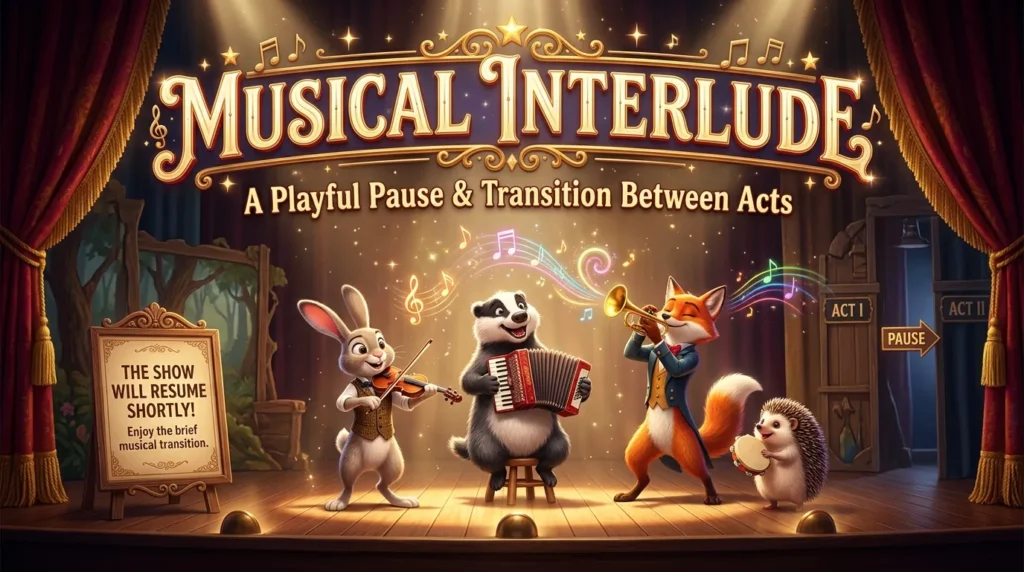
What Does Musical Interlude Mean?
A musical interlude is an instrumental or musical passage inserted between two larger sections of a composition or performance. The word interlude describes something that occurs between more substantial parts, while musical specifies that the passage involves music.
For example, a song might move from its first verse into a short guitar solo before the second verse begins. That solo can function as a musical interlude because it fills the space between lyrical sections and maintains the song’s momentum.
An interlude does not always have to be instrumental. It may include vocals, a change in instrumentation, a short melodic theme, or a combination of musical elements. Its defining feature is its role between larger sections rather than a specific instrument, length, or style.
Simple Definition of Musical Interlude
A musical interlude is a short musical section that occurs between the main parts of a song, composition, or performance.
Example: The singer pauses after the chorus while a piano melody plays before the next verse.
In this example, the piano passage is a musical interlude because it connects two vocal sections without interrupting the overall musical flow.
What Is the Purpose of a Musical Interlude?
A musical interlude can serve several purposes:
Connect sections: It creates a smooth transition between verses, choruses, movements, or scenes.
Provide variety: It introduces a different melody, instrument, rhythm, or texture.
Create an emotional effect: It can build tension, express sadness, establish calm, or increase excitement.
Give singers a break: It allows vocalists to rest while the music continues.
Highlight musicianship: It provides space for a guitar solo, piano passage, orchestral feature, or other instrumental performance.
Prepare for a change: It may lead into a new verse, a dramatic climax, a different scene, or the ending of a composition.
The exact purpose depends on the musical style and the context in which the interlude appears.
Musical Interlude Examples
Musical interludes can be found in many familiar musical situations. The following examples illustrate how they work.
1. An Instrumental Passage Between Verses
Imagine a song with two verses. After the first verse, the singer pauses while an acoustic guitar plays a short melody. The singer then returns for the second verse.
The guitar passage is an interlude because it connects the two vocal sections and gives the arrangement a moment of variety.
2. A Piano Interlude in a Ballad
A slow ballad may include a gentle piano passage between the chorus and the next verse. The music allows the emotion of the lyrics to settle before the singer continues.
In this context, the interlude contributes to the song’s reflective mood.
3. A Guitar Interlude in Rock Music
A rock song might feature a short electric guitar melody between a chorus and another verse. The passage may increase energy, reinforce the song’s musical identity, or showcase the guitarist’s playing.
Depending on its length and function, it may also be described as a guitar solo or instrumental break.
4. An Orchestral Interlude in a Stage Production
During a musical theater production, the orchestra may play a passage between two scenes. The music can maintain the atmosphere, signal a change in setting, or prepare the audience for the next dramatic moment.
This kind of interlude connects the musical and theatrical elements of the production.
5. A Short Interlude on an Album
An album may contain a brief instrumental track between two full-length songs. The track might introduce a melody that returns later, create a transition between different moods, or establish a new atmosphere.
Although this track may be called an interlude, its exact classification depends on how the artist and album present it.
Types of Musical Interludes
Musical interludes differ according to their instruments, structure, purpose, and setting.
Instrumental Interlude
An instrumental interlude uses instruments without a lead vocal section. It may feature piano, guitar, strings, synthesizers, percussion, or a full ensemble.
Instrumental interludes are common in popular music because they provide variety without requiring additional lyrics.
Example: A piano melody plays between the chorus and the final verse of a song.
Vocal Interlude
A vocal interlude includes singing or vocal sounds between the main sections of a composition. It might contain wordless humming, a brief sung phrase, a choir passage, or a short lyrical transition.
Unlike a conventional verse, a vocal interlude usually serves as a connecting passage rather than a major lyrical section.
Example: A choir sings a short melodic phrase before the lead singer returns.
Orchestral Interlude
An orchestral interlude uses an orchestra or orchestral arrangement to connect larger musical or dramatic sections. It may feature strings, woodwinds, brass, and percussion.
These interludes can be found in stage works, operas, film-related performances, and larger classical compositions.
Example: The orchestra plays a transitional passage between scenes in a stage production.
Electronic Interlude
Electronic interludes rely on synthesizers, programmed beats, ambient textures, or other electronically produced sounds. They are common in electronic music, pop, hip-hop, and experimental albums.
An electronic interlude may create a change in atmosphere or connect two songs with contrasting sounds.
Example: A short atmospheric synthesizer track links a high-energy song with a slower ballad.
Live Performance Interlude
A live performance interlude occurs during a concert, stage show, or other musical event. It may allow musicians to transition between songs, introduce a new arrangement, or create space for a solo.
Some live interludes are improvised, while others are carefully rehearsed.
Example: A band plays an extended instrumental passage while the lead singer prepares for the next song.
Musical Interlude vs. Bridge: What Is the Difference?
A musical interlude and a bridge can both introduce variety into a song, but they do not serve exactly the same function.
A musical interlude is generally a passage between larger sections. A bridge is a distinct song section that often contrasts with the verse and chorus, introducing different musical or lyrical material before returning to a familiar section.
| Feature | Musical Interlude | Bridge |
|---|---|---|
| Main function | Connects sections or provides a musical pause | Creates contrast within a song |
| Typical content | Often instrumental, but may include vocals | Often contains lyrics and vocals |
| Placement | Between larger sections or performance segments | Usually within a song’s established structure |
| Main purpose | Transition, atmosphere, variety, or instrumental feature | Harmonic, melodic, or lyrical development |
| Length | Often short, but varies | Usually a defined song section |
| Relationship to lyrics | May have no lyrics | Frequently has lyrics, though instrumental bridges exist |
For example, a guitar passage between two verses may be an interlude. A new lyrical section after the second chorus that leads into the final chorus is more likely to be a bridge.
However, musical terminology depends on context. An instrumental passage can sometimes perform more than one structural role, so the labels are not always mutually exclusive.
Musical Interlude vs. Instrumental Break
These terms overlap, but they can emphasize different aspects of a musical passage.
An instrumental break is a section in which instruments take over, often giving a musician space to perform a solo or feature. A musical interlude emphasizes the passage’s position between larger sections.
For instance, a saxophone solo between two verses may be both an instrumental break and a musical interlude. If the passage is primarily intended to showcase the saxophonist, instrumental break may be the more descriptive term. If its role is to connect the verses, interlude may be more appropriate.
The same passage can fit both descriptions.

Musical Interlude vs. Intro and Outro
An intro, interlude, and outro have different positions in a musical arrangement.
Intro: The opening section that introduces the song or composition.
Interlude: A passage that occurs between larger sections.
Outro: The closing section that brings the song or composition toward its end.
Consider a song that begins with a piano melody, moves through several verses and choruses, includes a short guitar passage in the middle, and ends with a fading instrumental section.
The opening piano melody is the intro, the guitar passage is the interlude, and the final instrumental section is the outro.
These terms describe musical function and placement, not necessarily a specific instrument or duration.
How Long Is a Musical Interlude?
There is no fixed duration for a musical interlude. Its length depends on the style of music, the structure of the composition, and the effect the artist wants to create.
A pop song may use an interlude lasting only a few seconds. A live performance may feature a longer instrumental passage, while a theatrical or classical work may contain an extended interlude.
The important factor is the passage’s role. A brief musical transition can qualify as an interlude, and a longer passage can serve the same purpose if it connects larger sections or provides a pause between them.
An interlude does not have to follow a strict formula. Composers and performers decide how much musical space is needed to support the work.
Where Are Musical Interludes Used?
Popular Music
In pop, rock, country, hip-hop, and other popular genres, interludes can connect verses and choruses, introduce instrumental solos, or create a change in mood. They help prevent a song from sounding repetitive and give the arrangement room to develop.
Classical Music
In classical music, the term may describe a connecting passage within a larger work. The related concept appears in various forms of orchestral, chamber, keyboard, and theatrical music. The exact function depends on the composition’s structure and historical context.
Musical Theater and Opera
Interludes may connect scenes, maintain dramatic continuity, or provide music during a transition. They can also prepare the audience emotionally for an important event.
Film, Television, and Games
A musical passage between scenes, sequences, or segments can function as an interlude when it provides a transition or temporary musical pause. In film and games, related passages may also be described as transitional cues, depending on their purpose.
Religious and Ceremonial Settings
Instrumental music may appear between readings, prayers, hymns, or other parts of a service or ceremony. In some settings, such a passage is called an interlude, although local traditions may use more specific terminology.
Why Are Musical Interludes Important?
Musical interludes contribute to the structure and emotional experience of a performance in ways that may be easy to overlook.
They Prevent Repetition
A song built around repeated verses and choruses can become predictable if nothing changes. An interlude introduces fresh musical material or a different arrangement, helping maintain the listener’s attention.
They Build Emotion
An interlude can slow the pace and allow a powerful lyric to resonate. Alternatively, a rising instrumental passage can build anticipation before a dramatic chorus or climax.
They Improve Transitions
Changes between musical sections can feel abrupt when there is no connecting material. An interlude can make those transitions smoother and preserve a consistent flow.
They Showcase Instruments
Interludes offer musicians an opportunity to highlight their skills or bring a particular instrument to the foreground. A short piano, guitar, violin, or saxophone passage may become one of the most memorable parts of a piece.
They Support Storytelling
In musicals, operas, and concept albums, interludes can help connect different parts of a story. A recurring melody or change in musical atmosphere may signal a shift in time, place, character, or emotion.
How to Use “Musical Interlude” in a Sentence
The phrase musical interlude is commonly used in discussions of songs, concerts, stage productions, and recorded albums.
Music review: “The musical interlude gives the singer’s emotional lyrics room to resonate.”
Live concert: “The band performed a lively musical interlude before returning to the main song.”
Theater: “A musical interlude connects the two scenes and prepares the audience for the next act.”
Album description: “The short musical interlude creates a transition between the album’s contrasting moods.”
Classroom discussion: “The teacher asked students to identify the musical interlude between the verses.”
Instrumental feature: “A gentle piano melody serves as a musical interlude before the final chorus.”
Performance review: “The orchestral interlude added suspense to the dramatic scene.”
Songwriting: “The composer added a musical interlude to make the transition into the last verse smoother.”
Religious service: “A brief musical interlude followed the reading.”
General description: “The musical interlude allowed the audience to reflect before the performance continued.”
These examples show that the phrase can describe both a specific passage in a song and a connecting musical segment in a larger performance.

Synonyms and Related Terms for Musical Interlude
There is no single synonym that fits every use of musical interlude. The best alternative depends on what the passage does.
| Term | Meaning or Context |
|---|---|
| Instrumental passage | Music played primarily by instruments |
| Instrumental break | A section where instruments take over, often featuring a solo |
| Musical transition | Music that connects sections or changes in mood |
| Intermezzo | A short intervening musical piece or section; its precise use varies by tradition |
| Bridge | A contrasting section within a song’s structure |
| Intermission music | Music performed or played during a break in an event |
| Musical passage | A general term for a segment of music |
| Solo | A passage that features one performer or instrument |
| Intro | The opening section of a composition |
| Outro | The closing section of a composition |
These terms are related, but they are not interchangeable in every context. For example, an intro begins a piece, while an interlude generally occurs between sections. A solo describes a performance feature, whereas an interlude describes a passage’s role or placement.