

What Does HR Department Mean?
HR department means Human Resources department. It is the organizational unit that manages employee-related processes and helps an organization recruit, develop, support, and retain its workforce.
The department typically works with employees and managers on hiring, onboarding, training, payroll coordination, benefits, workplace policies, employee relations, and compliance. Its exact duties depend on the size, industry, and structure of the organization.
For example, when a company advertises a vacancy, reviews applications, interviews candidates, and prepares employment documents, the HR department may coordinate these activities.
Quick Definition
HR department (noun): The department in an organization that handles human resources, including employee recruitment, records, training, workplace policies, and employee relations.
Full form: Human Resources department
Simple meaning: The department that helps manage people at work.
Example: “Please contact the HR department if you have questions about your employment contract.”
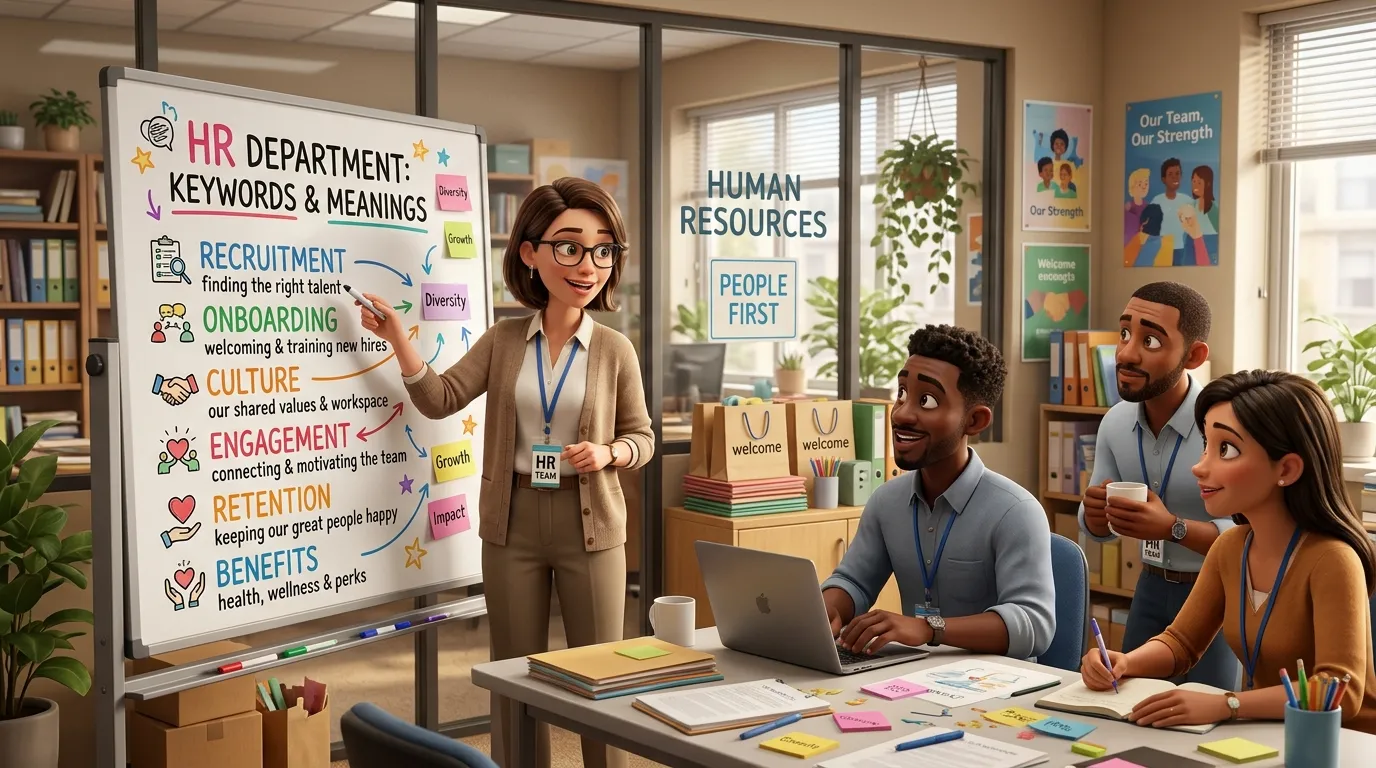
What Does the HR Department Do?
The HR department has several responsibilities that help an organization operate effectively and maintain a productive workplace.
1. Recruitment and Hiring
HR often manages the hiring process, including advertising job openings, reviewing applications, scheduling interviews, and coordinating job offers. Hiring managers usually help evaluate candidates’ technical skills and suitability for specific roles.
Example: A company needs a new accountant. HR publishes the vacancy, screens applications, arranges interviews, and communicates with the selected candidate.
2. Employee Onboarding
Onboarding is the process of helping new employees join an organization and understand how it operates. HR may prepare employment paperwork, explain company policies, arrange orientation, and coordinate initial training.
Example: On their first day, a new employee meets HR to complete documents and learn about workplace rules.
3. Employee Records and Documentation
HR maintains or coordinates employee records, such as employment contracts, job titles, attendance information, leave records, and other personnel documentation. Access to these records should be managed appropriately to protect employee privacy.
4. Payroll and Employee Benefits
In some organizations, HR manages payroll directly; in others, it works with the finance or payroll department. HR may also coordinate benefits such as health coverage, paid leave, retirement plans, or other employee entitlements, depending on local law and company policy.
5. Training and Development
HR helps identify training needs and organize learning opportunities so employees can improve their skills and prepare for greater responsibilities.
Example: HR arranges a communication workshop for customer service representatives.
6. Performance Management
HR may help managers establish performance-review processes, set evaluation guidelines, document feedback, and identify development opportunities. Managers generally assess employees’ day-to-day performance in their teams.
7. Employee Relations and Workplace Concerns
HR may help address workplace disputes, complaints, harassment concerns, disciplinary matters, and communication problems. Its role is to follow organizational procedures, investigate concerns where appropriate, and help the organization respond fairly and lawfully.
8. Workplace Policies and Legal Compliance
HR helps develop and communicate policies related to attendance, leave, conduct, equal opportunity, workplace safety, and other employment matters. It also helps the organization comply with applicable labor and employment requirements.
Common Jobs in the HR Department
An HR department may include several roles, depending on the organization’s size and needs.
Job title | Main responsibility |
|---|---|
HR Assistant | Helps with employee records, documents, and routine HR tasks. |
HR Officer | Handles recruitment, employee queries, and HR administration. |
HR Coordinator | Organizes interviews, onboarding, and HR activities. |
HR Recruiter | Finds and screens candidates for job vacancies. |
HR Manager | Oversees HR operations, policies, and employee-related processes. |
HR Director | Leads HR strategy and works with senior leadership. |
HR Business Partner | Advises managers on workforce planning and people-related decisions. |
These roles can overlap, especially in smaller organizations.
Why Is the HR Department Important?
The HR department helps connect an organization’s business goals with the needs and capabilities of its employees. Its importance includes:
Organized hiring: Helps businesses find suitable employees for available positions.
Employee support: Provides a contact point for questions about policies, leave, benefits, and workplace issues.
Professional development: Supports training and career growth.
Policy consistency: Helps ensure workplace rules are communicated and applied appropriately.
Employee retention: Supports practices that encourage employees to remain with the organization.
Risk management: Helps employers handle employment documentation and follow relevant regulations.
However, HR is not necessarily an employee’s personal representative. It generally has responsibilities to both the workforce and the organization, so employees should understand their workplace policies and applicable rights.
HR Department vs. Personnel Department
The terms HR department and personnel department are closely related and are sometimes used interchangeably.
HR department | Personnel department |
|---|---|
Often covers both administrative and strategic workforce responsibilities. | Traditionally emphasizes staffing records and administrative employment tasks. |
May manage recruitment, training, performance, and employee development. | Often focuses on hiring administration, attendance, and employee documentation. |
Common terminology in modern organizations. | An older or alternative term that some organizations still use. |
The distinction is not absolute. Some organizations use personnel department simply as another name for HR.
HR Department Meaning in Simple English
In simple English, the HR department is the office in a company that deals with employees and employment matters.
For example, if you want to apply for a job, ask about your salary, submit a leave request, update your employment information, or report a workplace concern, HR may be the department you need to contact.
In Pakistan and other countries, you may also hear people call it the HR office, Human Resources, personnel department, or HR section.
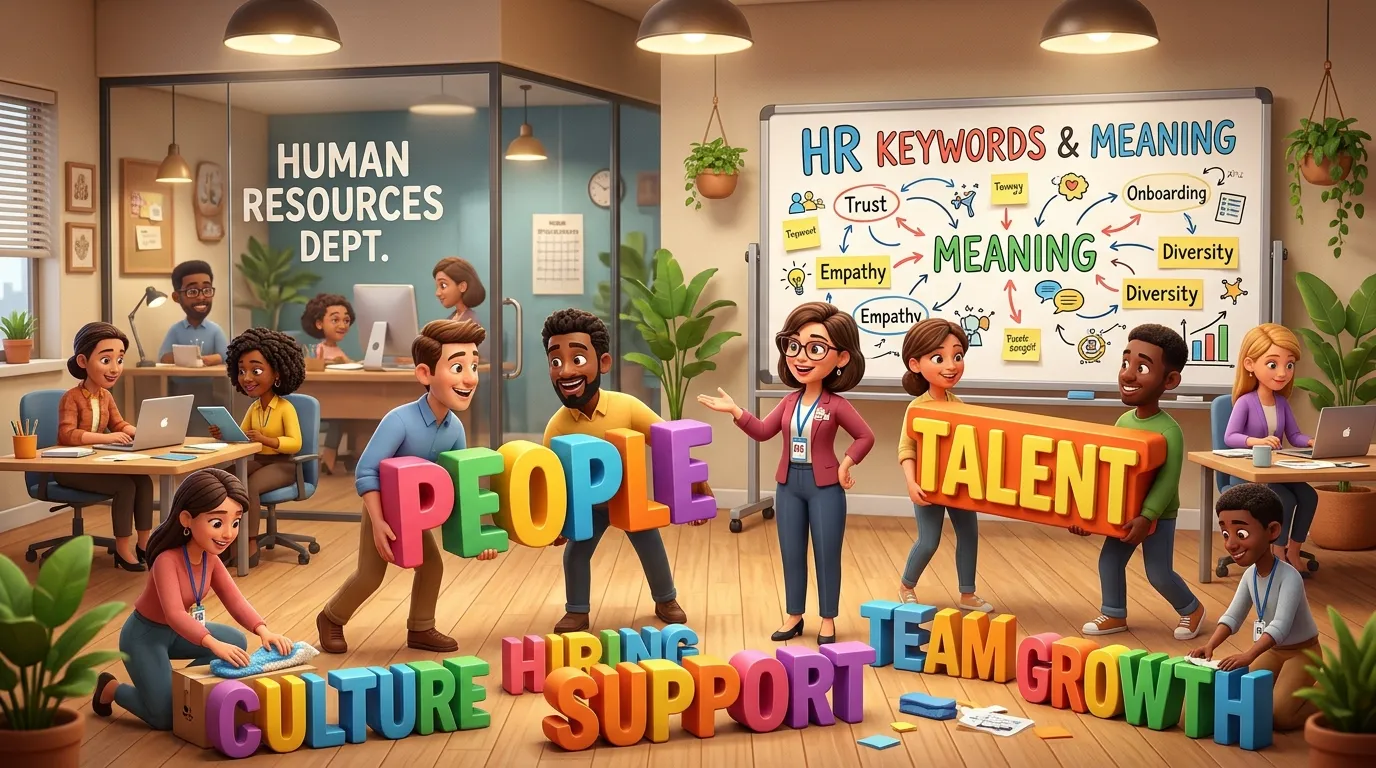
Examples of “HR Department” in Sentences
Here are 10 examples showing how the term is used in everyday workplace communication.
Recruitment: The HR department is accepting applications for the sales assistant position.
Leave: Please contact the HR department to confirm your remaining annual leave.
Employment documents: The HR department prepared my employment contract.
New employees: All new employees must attend an orientation session organized by HR.
Salary inquiry: I emailed the HR department to ask about my salary details.
Training: The HR department arranged a professional development workshop for the staff.
Workplace concerns: She reported the workplace issue to the HR department.
Job application: The HR department invited me for an interview.
Employee records: HR updated the employee’s contact information.
Company policies: The HR department explained the new attendance policy to all employees.
Common Phrases Used With HR Department
Contact the HR department
Work in the HR department
HR department responsibilities
HR department manager
HR department email
HR department job vacancies
HR department policies
HR department employee records
HR department recruitment process
HR department complaint procedure
These expressions are useful when reading job advertisements, writing professional emails, or communicating with an employer.
Related Terms and Their Meanings
Understanding these related terms can help clarify the meaning of HR department.
Human Resources (HR): The function or department responsible for managing employee-related matters.
Human Resource Management (HRM): The process of planning, organizing, and managing an organization’s workforce.
Recruitment: The process of attracting and identifying candidates for job vacancies.
Employee Relations: The management of relationships and workplace issues involving employees and employers.
Payroll: The process of calculating and paying employee wages or salaries.
Onboarding: The process of helping a new employee join and adjust to an organization.
Personnel: The people employed by an organization, or the administrative function that manages employee matters.
Frequently Asked Questions
1. What does HR stand for?
HR stands for Human Resources. It refers to the function that manages employee-related activities within a company or organization.
2. What is the main purpose of the HR department?
The main purpose of the HR department is to help an organization manage its workforce. This includes recruitment, employee documentation, training, workplace policies, and employee relations.
3. What does an HR officer do?
An HR officer typically handles recruitment activities, employee records, onboarding, leave administration, and staff inquiries. Specific duties depend on the employer.
4. Is HR responsible for salary?
HR may coordinate salary information, compensation policies, and employee benefits. Actual salary calculations and payments may be handled by a payroll or finance team.
5. Can I contact HR if I have a problem at work?
Yes. HR is often an appropriate contact for workplace concerns, policy questions, harassment complaints, or employment documentation. The process for reporting an issue depends on the organization and the nature of the concern.
6. Is HR the same as a manager?
No. A manager typically oversees a team’s daily work and performance, while HR focuses on employment processes and workforce-related matters. Managers and HR often work together.
7. What is the difference between HR and HRM?
HR usually refers to Human Resources or the department responsible for employee matters. HRM stands for Human Resource Management, the broader practice of managing and developing an organization’s workforce.