

Bivouac Camping vs. Other Types of Camping
Bivouac camping overlaps with several outdoor activities, but the terms emphasize different approaches to spending the night outside.
The key distinction is that bivouac describes a temporary, minimalist overnight camp, while backpacking describes a style of travel and wild camping describes where someone camps. These categories can overlap rather than exclude one another.
What Equipment Do You Need for Bivouac Camping?
The equipment required depends on the climate, altitude, terrain, expected weather, and whether the bivouac is planned or unexpected. Minimalist does not mean unprepared: the aim is to carry enough protection for the conditions without unnecessary bulk.
Essential equipment may include:
Bivy sack: A compact protective cover for a sleeping bag, often designed to resist wind and moisture. Waterproof models may need careful ventilation to reduce condensation.
Sleeping bag: Choose one rated appropriately for the expected overnight low, allowing for your personal cold tolerance.
Insulated sleeping mat: Reduces heat loss to cold ground and improves comfort.
Waterproof groundsheet or tarp: Provides extra protection from damp ground and rain when suitable for the setting.
Weather-appropriate clothing: Insulating layers, a windproof or waterproof outer layer, and dry sleepwear help manage changing conditions.
Headlamp: Allows you to see and work safely after dark, ideally with spare or rechargeable power.
Water and food: Carry enough for the planned duration, with additional provision appropriate to the route and conditions.
Navigation and emergency equipment: A map, compass or reliable GPS device, communication method, first-aid supplies, and an emergency plan.
Sun, insect, and cold protection: Select these according to the environment and season.
A bivouac at a high mountain elevation requires a different level of preparation from an overnight stop in mild woodland. In exposed or cold environments, a bivy sack alone may not provide adequate protection from severe weather.
What Is a Bivvy Sack?
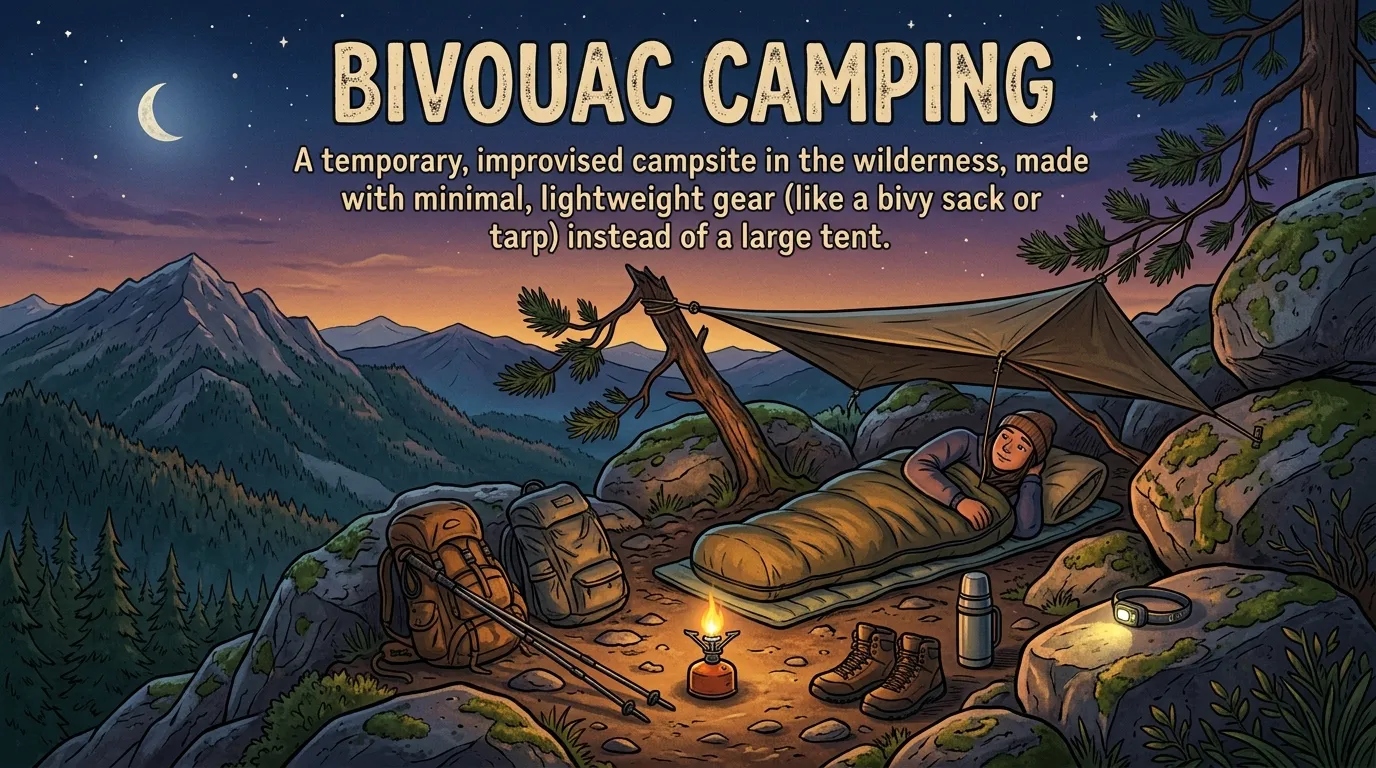
A bivvy sack, also called a bivy bag, is a lightweight protective cover that fits around a sleeping bag. It is designed to add protection from wind, moisture, and exposure without requiring a full tent.
A bivy sack is not the same as a bivouac itself. The sack is a piece of equipment; the bivouac is the temporary camp or overnight arrangement. Some bivouacs use tarps or other shelters, and some involve sleeping in an established mountain shelter.
How to Choose a Safe Bivouac Location
Selecting a suitable place to sleep is one of the most important decisions in bivouac camping. A lightweight shelter offers less protection than a fully enclosed tent, so the location needs to reduce exposure to avoidable hazards.
Consider the following principles:
Check the weather. Avoid exposed locations when strong winds, thunderstorms, heavy rain, or extreme cold are forecast.
Stay away from unstable terrain. Avoid rockfall zones, avalanche paths, landslide-prone slopes, and the base of unstable cliffs.
Avoid drainage channels and flood-prone ground. Dry streambeds can fill rapidly during rainfall, even when the immediate campsite appears safe.
Look for natural wind protection without creating new hazards. A sheltered location can improve comfort, but do not sleep beneath unstable branches or loose rock.
Check local rules. Protected areas, private land, and designated mountain routes may have restrictions on overnight stays or open-air camping.
Protect the environment. Use durable surfaces where permitted, keep away from sensitive habitats, and carry out all rubbish.
A sheltered-looking spot is not necessarily a safe one. In mountain terrain, for example, the shortest route to a protected area may pass beneath unstable cliffs or through avalanche-prone ground. Safety takes priority over convenience.
Is Bivouac Camping Safe for Beginners?
Bivouac camping can be a rewarding outdoor experience, but sleeping with minimal shelter requires careful preparation. A beginner should not treat it as an easy substitute for a tent in all conditions.
For a first attempt, choose a legal, familiar location with mild weather, straightforward access, and a reliable way to get help. Test your sleeping system close to home before relying on it in remote terrain. Learn how your shelter performs in wind, how much warmth your sleeping bag provides, and how to manage condensation.
Mountaineering bivouacs deserve particular caution. A forced overnight stop caused by injury, darkness, route delays, or deteriorating weather is different from a planned recreational bivouac. In either case, exposure can become dangerous quickly.
Do not rely on a bivy sack as a replacement for a proper shelter in severe weather. If conditions exceed your equipment or experience, changing the route, descending when safe, or seeking established shelter may be the better decision.
Bivouac Camping in Context: Common Phrases and Collocations
The word bivouac appears in several recurring expressions, especially in outdoor recreation and mountaineering.
Phrase | Meaning |
|---|---|
Bivouac camping | Spending the night outdoors in a temporary, often minimalist camp. |
Bivouac shelter | A temporary shelter used for overnight protection, often without a conventional tent. |
Bivouac sack | A protective cover for a sleeping bag or sleeper. |
Emergency bivouac | An unplanned overnight stop when continuing travel is unsafe or impossible. |
Alpine bivouac | An overnight stop in mountain terrain, often involving limited shelter and equipment. |
Bivouac site | The location chosen for a temporary overnight camp. |
Bivouac overnight | To spend the night in a temporary outdoor camp. |
The distinction between a planned and an emergency bivouac is particularly useful. A planned bivouac is part of an itinerary; an emergency bivouac occurs because circumstances force a person to stop.
Different Ways to Say Bivouac Camping (Synonyms & Alternatives)
There is no perfect synonym for bivouac camping in every situation. Some alternatives emphasize minimal shelter, while others describe remote camping, overnight travel, or an unplanned stop.
Exact or Closest Alternatives
Minimalist camping: Camping with limited equipment and a simple setup; it can describe bivouacking but also includes other lightweight camping styles.
Outdoor overnighting: A broad, neutral expression for spending a night outside, whether in a bivy sack, tarp shelter, or other arrangement.
Open-air camping: Emphasizes sleeping outdoors, potentially without a conventional tent.
Formal or Technical Alternatives
Alpine bivouac: A term used in mountaineering for an overnight stop in mountainous terrain.
Temporary encampment: A formal description of a short-term camp, including military and outdoor uses.
Emergency overnight sheltering: Describes a forced overnight stop when weather, injury, darkness, or other circumstances prevent safe travel.
Casual or Informal Alternatives
Bivy camping: An informal term for camping with a bivy sack or similarly minimalist arrangement.
Sleeping under the stars: A familiar expression for sleeping outdoors, usually emphasizing the experience rather than the equipment.
Rough camping: An informal expression for camping with few facilities; its precise meaning varies by region.
More Specialized Alternatives
Ultralight camping: A style of camping that prioritizes reducing carried weight, whether or not a bivouac is involved.
Backcountry camping: Camping in remote or less-developed areas, subject to local access rules.
Wild camping: Camping outside an established campground; it may use a tent, tarp, or bivouac setup.
Antonyms and Contrasting Concepts
Bivouac camping has no exact antonym, but the following terms contrast with its minimalist, temporary nature.
Glamping: Camping designed around greater comfort and amenities.
Car camping: Camping where a vehicle provides easy access to equipment and supplies.
Indoor accommodation: Sleeping in a building rather than an outdoor camp.
Established campsite: A designated camping area that may provide facilities, prepared pitches, or other services.
When to Use Bivouac Camping vs. Its Alternatives
Expression | Best used when… | Example |
|---|---|---|
Bivouac camping | Describing a minimalist temporary overnight camp. | The climbers planned a bivouac halfway up the route. |
Wild camping | Emphasizing that camping takes place outside a conventional campground. | They researched the rules before wild camping in the national park. |
Backpacking | Describing multi-day travel with equipment carried on foot. | She spent a week backpacking through the mountains. |
Ultralight camping | Emphasizing a low equipment weight. | He selected an ultralight shelter to reduce his pack weight. |
Emergency bivouac | Describing an unplanned overnight stop. | Heavy snowfall forced the team into an emergency bivouac. |
Glamping | Describing camping with added comfort and amenities. | The family chose glamping for its ready-made accommodation. |
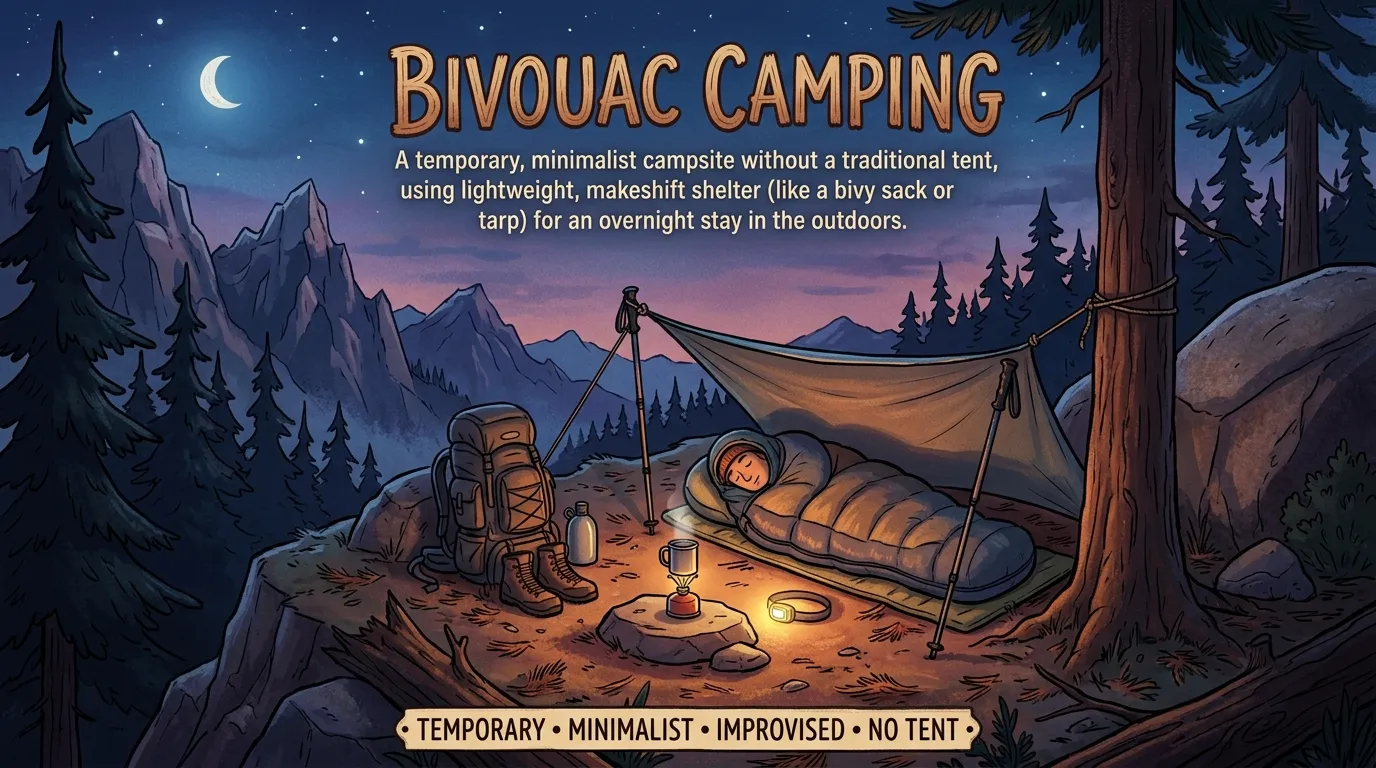
The most useful distinction is this: bivouac camping describes the temporary overnight setup, backpacking describes the journey, and wild camping describes the camping context. One trip may involve all three.
Related Concepts and Semantic Network
These related terms provide useful connections for readers learning about minimalist outdoor travel.
[link: Bivy sack meaning] — Explains the lightweight protective cover often used during a bivouac.
[link: Wild camping meaning] — Covers camping outside established campgrounds and the access rules that may apply.
[link: Backpacking meaning] — Describes carrying camping equipment while travelling on foot.
[link: Alpine climbing meaning] — Explores mountain travel where planned or emergency bivouacs may be necessary.
[link: Leave No Trace meaning] — Explains outdoor ethics focused on reducing environmental impact and leaving natural areas undisturbed.
Together, these concepts help distinguish the equipment, activity, location, and environmental responsibilities associated with bivouac camping.