
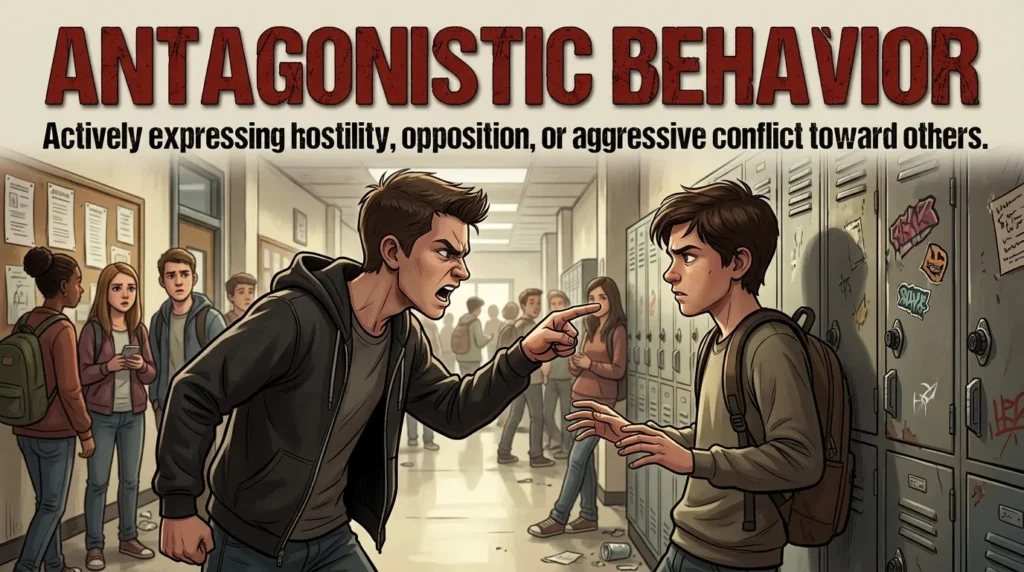
What Does Antagonistic Behavior Mean?
Antagonistic behavior means acting in a hostile, oppositional, or confrontational way toward another person, group, or idea. It often involves creating tension, resisting cooperation, provoking disagreements, or treating others as opponents rather than partners.
The word antagonistic describes opposition or hostility. Behavior refers to the way someone acts. Together, the phrase describes actions that create conflict or make relationships more difficult.
Simple Definition of Antagonistic Behavior
Antagonistic behavior is conduct that shows hostility, opposition, or a willingness to provoke conflict with others.
| Term | Meaning |
|---|---|
| Antagonistic | Hostile, oppositional, or confrontational |
| Behavior | The way a person acts |
| Antagonistic behavior | Actions that create opposition or conflict |
| Hostility | An unfriendly or aggressive attitude |
| Confrontation | A direct disagreement or challenge |
| Provocation | An action intended or likely to trigger a reaction |
What Does Antagonistic Behavior Look Like?
Antagonistic behavior can be obvious or subtle. Someone may openly insult another person, repeatedly challenge their decisions in an aggressive manner, or make sarcastic comments designed to embarrass them.
Other examples include deliberately undermining a colleague, refusing reasonable cooperation to create difficulties, or turning minor disagreements into personal disputes.
However, disagreement alone is not antagonistic behavior. People can challenge ideas, set boundaries, or express criticism respectfully. The tone, intention, context, and repeated nature of the actions help determine whether behavior is antagonistic.
Common Signs of Antagonistic Behavior
Recognizing common signs can help people understand when an interaction is becoming hostile or unnecessarily confrontational.
1. Frequent Arguments
A person may turn routine conversations into disputes, challenge minor details aggressively, or insist on winning every disagreement.
Example: A team member responds to every suggestion with an argument instead of discussing its practical value.
2. Hostile or Aggressive Language
Antagonistic communication may include insults, threats, mocking remarks, or deliberately disrespectful comments.
Example: Instead of explaining why they disagree, someone calls a colleague’s idea stupid.
3. Provoking Others
Some behavior appears intended to irritate, embarrass, or trigger another person’s emotional response.
Example: A person repeatedly makes personal jokes about a sensitive subject even after being asked to stop.
4. Persistent Criticism
Constructive feedback helps people improve. Antagonistic criticism, by contrast, may focus on humiliation, personal attacks, or finding fault without offering a useful solution.
Example: A manager dismisses an employee’s work as worthless instead of identifying specific areas for improvement.
5. Refusing to Cooperate
A person may deliberately obstruct a shared task, ignore reasonable requests, or make teamwork unnecessarily difficult.
Example: A colleague withholds information needed for a project because they are angry with another team member.
Not every refusal is antagonistic. Someone may have legitimate concerns, limited resources, or appropriate reasons to decline a request.
6. Personal Attacks
Rather than addressing an idea or action, an antagonistic person may attack someone’s intelligence, character, appearance, or competence.
Example: During a discussion, someone says, “You never understand anything,” instead of explaining the disagreement.
7. Deliberately Escalating Conflict
A person may respond to a minor issue with excessive hostility, bring unrelated grievances into the discussion, or continue an argument after a reasonable resolution has been offered.
Example: A small scheduling mistake becomes a prolonged personal dispute.
Examples of Antagonistic Behavior in Everyday Life
The meaning of antagonistic behavior becomes clearer when considered in different situations.
Antagonistic Behavior in Relationships
In personal relationships, antagonistic behavior may involve belittling comments, constant accusations, hostile sarcasm, or deliberately provoking a partner during disagreements.
For example, one partner raises a concern about household responsibilities, and the other responds with insults rather than discussing the problem.
Healthy relationships can include disagreements. The difference is whether people communicate respectfully and work toward understanding or repeatedly attack one another.
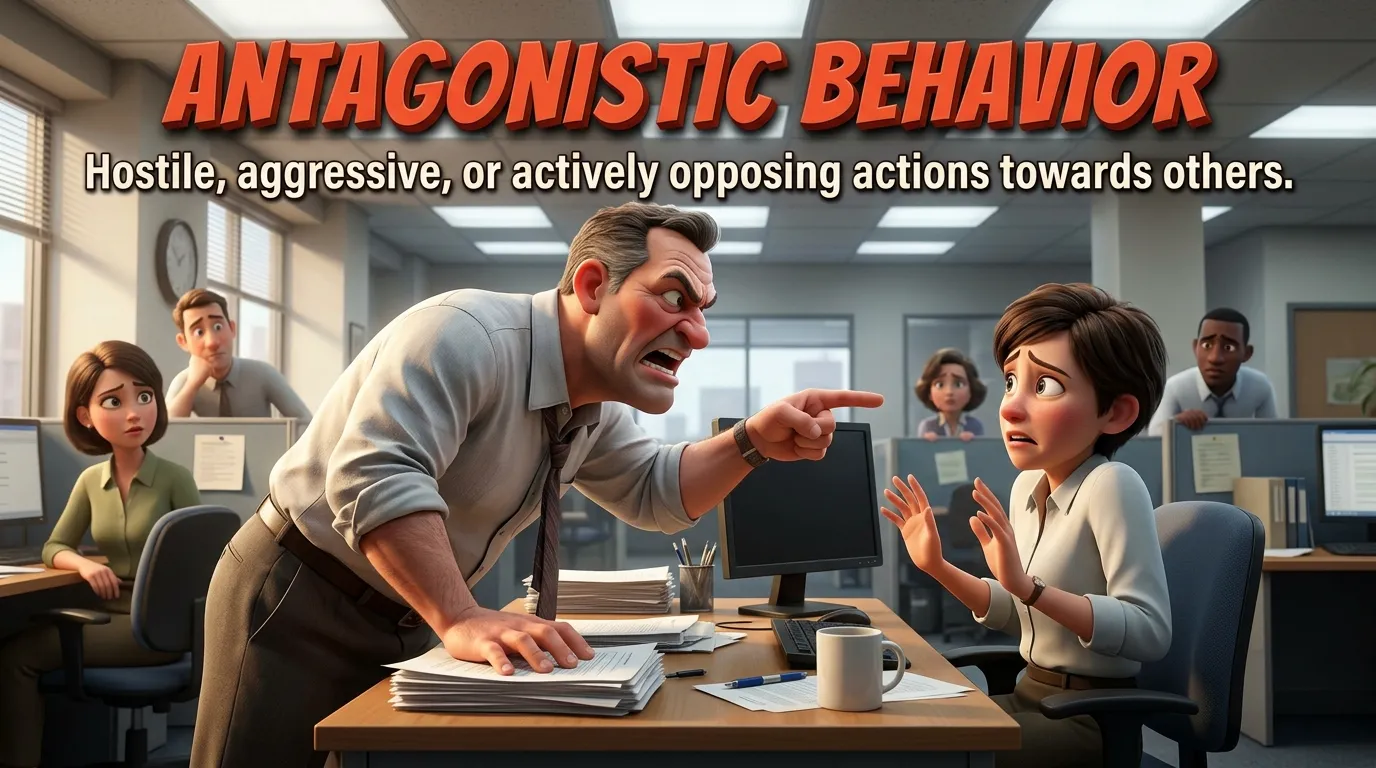
Antagonistic Behavior at Work
In a workplace, antagonistic behavior may include undermining colleagues, making hostile remarks during meetings, spreading damaging rumors, or intentionally interfering with teamwork.
For example, an employee repeatedly mocks a coworker’s contributions in front of the team instead of offering professional feedback.
Such behavior can reduce trust, discourage collaboration, and make the workplace stressful. Managers should assess specific actions and documented patterns rather than relying only on personal impressions.
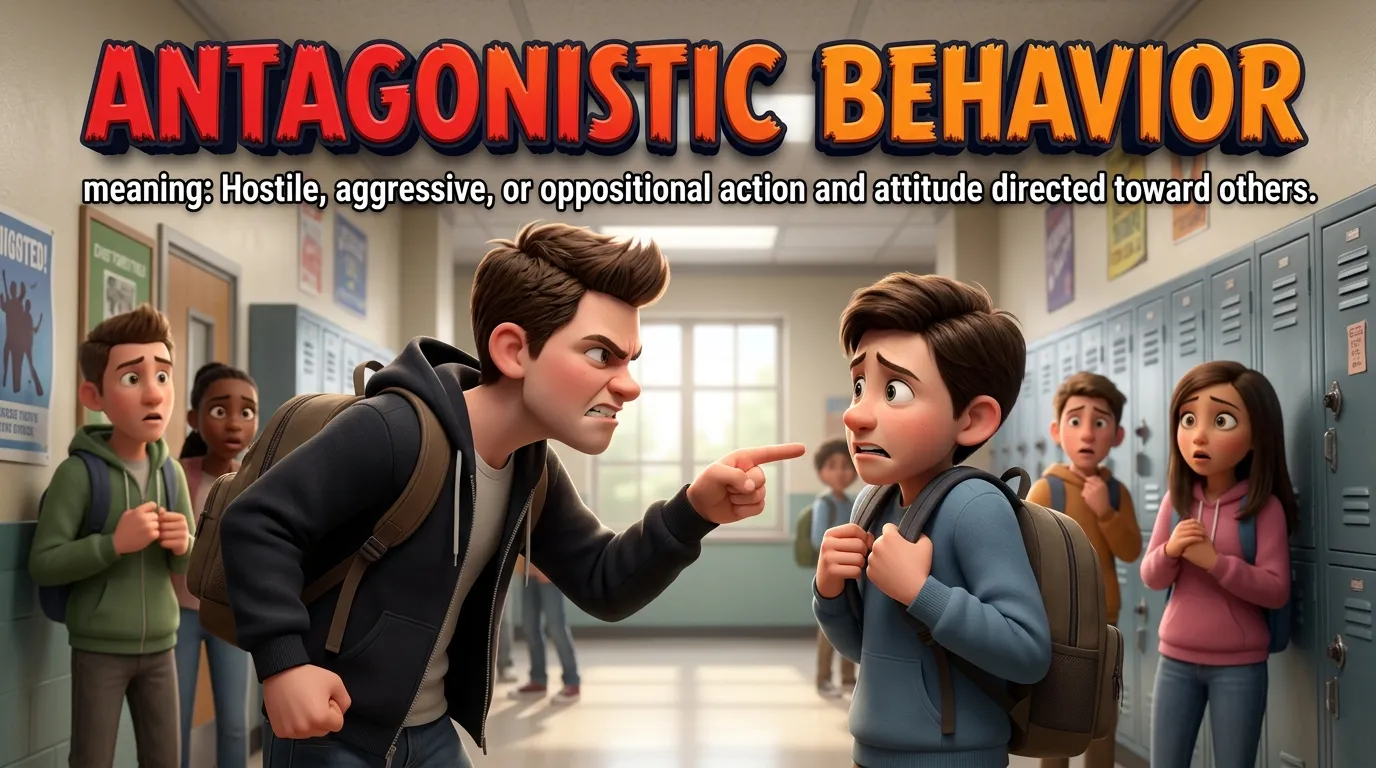
Antagonistic Behavior at School
Students may display antagonistic behavior by provoking classmates, starting unnecessary arguments, mocking others, or deliberately disrupting group activities.
For example, a student repeatedly insults a classmate whenever they answer a question.
Teachers and school staff can respond by setting clear expectations, addressing harmful conduct, and helping students develop conflict-resolution skills.
Antagonistic Behavior Online
Online antagonism often appears in comment sections, group chats, gaming communities, and social media discussions.
Examples include personal insults, baiting others into arguments, deliberately inflammatory comments, and repeated hostile replies.
A person can disagree strongly online without being antagonistic. The distinction depends on whether they engage with the issue respectfully or focus on provoking and attacking others.
Antagonistic Behavior in Families
Family disagreements may become antagonistic when relatives use blame, humiliation, persistent hostility, or personal attacks instead of discussing their concerns.
For example, a family member repeatedly brings up past mistakes to embarrass someone during unrelated conversations.
Clear boundaries and calm communication may help, although repeated threatening or abusive behavior can require outside support.
Why Do People Display Antagonistic Behavior?
There is no single explanation for antagonistic behavior. It may arise from several situational, interpersonal, or individual factors.
1. Frustration and Stress
People under pressure may become impatient, defensive, or irritable. Stress can contribute to hostile reactions, although it does not excuse harmful conduct.
2. Feeling Threatened or Criticized
Some people respond to disagreement as though it were a personal attack. They may become confrontational when their status, competence, beliefs, or decisions are questioned.
3. Poor Conflict-Resolution Skills
Someone who struggles to express needs, listen to criticism, or negotiate differences may rely on arguments or aggression instead of constructive discussion.
4. Desire for Control
In some situations, antagonistic behavior is used to dominate a conversation, intimidate others, or influence a decision through pressure rather than cooperation.
5. Learned Communication Patterns
People may copy hostile communication styles they have repeatedly observed in family, social, or workplace environments. These patterns can change, but doing so may require awareness and practice.
6. Competition or Resentment
Competition, jealousy, unresolved grievances, or perceived unfairness can contribute to antagonistic interactions. However, these causes cannot be assumed from behavior alone.
Important distinction: A person may display antagonistic behavior in one situation without having a consistently hostile personality. Understanding the context is essential before drawing conclusions about their character or motives.
Antagonistic Behavior vs. Assertive Behavior
Antagonistic and assertive behavior can both involve disagreement, but they differ in how people express their positions.
| Feature | Antagonistic Behavior | Assertive Behavior |
|---|---|---|
| Main purpose or effect | Creates opposition or hostility | Expresses needs and views clearly |
| Communication style | May be aggressive, mocking, or provocative | Direct, respectful, and firm |
| Treatment of others | May involve personal attacks | Respects others’ rights and boundaries |
| Handling disagreement | Often escalates conflict | Seeks clarity or a workable solution |
| Example | “Your idea is ridiculous, and you never think.” | “I disagree because the plan may exceed our budget.” |
Assertiveness is not antagonism. A person can firmly reject an unreasonable request, report misconduct, or challenge unfair treatment without being hostile.
Antagonistic Behavior vs. Aggressive Behavior
These terms overlap, but they are not identical.
Antagonistic behavior involves opposition, hostility, or conflict-provoking conduct. It may be verbal, social, or indirect.
Aggressive behavior more specifically involves forceful, threatening, or attacking actions. It can include verbal aggression, intimidation, or physical aggression.
For example, a person who repeatedly makes sarcastic remarks to provoke a coworker may be acting antagonistically. Someone who threatens to harm that coworker is displaying aggressive behavior as well.
The precise distinction depends on the context, and the two terms can describe the same incident.
How to Respond to Antagonistic Behavior
A thoughtful response can reduce unnecessary conflict while protecting personal boundaries.
1. Stay Calm and Focus on the Issue
Avoid responding to hostility with personal attacks. A calm response can prevent the discussion from escalating.
Example: “Let’s focus on the problem we need to solve rather than criticizing each other.”
Staying calm does not mean accepting disrespect or pretending that harmful conduct is acceptable.
2. Set Clear Boundaries
Explain which behavior is unacceptable and what kind of communication you expect.
Example: “I’m willing to discuss this, but I won’t continue while we’re insulting each other.”
A boundary should be specific, reasonable, and something you can follow through on.
3. Address Specific Actions
Describe what happened rather than labeling someone as a bad or hostile person.
Instead of saying, “You’re always antagonistic,” try: “When you interrupted me and made personal comments during the meeting, it became difficult to discuss the proposal.”
Specific observations make it easier to clarify misunderstandings and identify changes that may be needed.
4. Choose the Right Time and Setting
Sensitive conversations may go better in a private, calm setting than during a heated argument or public meeting.
If the person is threatening or intimidating, however, a private conversation may not be safe or appropriate.
5. Document Repeated Workplace Incidents
If antagonistic conduct repeatedly affects your work, keep factual records of relevant incidents, including dates, actions, and any witnesses. Follow your organization’s reporting procedures when appropriate.
6. Seek Support When Necessary
If the behavior involves persistent harassment, intimidation, threats, or abuse, consider contacting a trusted person, manager, human resources representative, counselor, or relevant support service.
If you face an immediate threat, prioritize your safety and contact local emergency assistance when needed.
Synonyms and Related Terms for Antagonistic Behavior
Several terms are related to antagonistic behavior, but their meanings are not exactly the same.
| Word or Phrase | Meaning | Difference |
|---|---|---|
| Hostile behavior | Unfriendly or threatening conduct | Emphasizes hostility |
| Confrontational behavior | Directly challenging or opposing someone | Can be appropriate or inappropriate depending on context |
| Aggressive behavior | Forceful, attacking, or threatening conduct | Often stronger than antagonistic behavior |
| Provocative behavior | Conduct likely or intended to trigger a reaction | Focuses on provoking others |
| Combative behavior | A tendency to argue or fight | Suggests a strongly adversarial approach |
| Obstructive behavior | Actions that hinder progress or cooperation | Focuses on interference |
| Adversarial behavior | Acting as though another person is an opponent | Emphasizes opposition |
Antonyms of Antagonistic Behavior
Opposite or contrasting terms include:
Cooperative behavior.
Respectful communication.
Constructive disagreement.
Collaborative behavior.
Diplomatic conduct.
Supportive behavior.
Peaceful interaction.
The best opposite depends on the situation. For example, cooperative is useful when discussing teamwork, while diplomatic describes tactful communication during disagreement.