

What Does Biohacking Technology Mean?
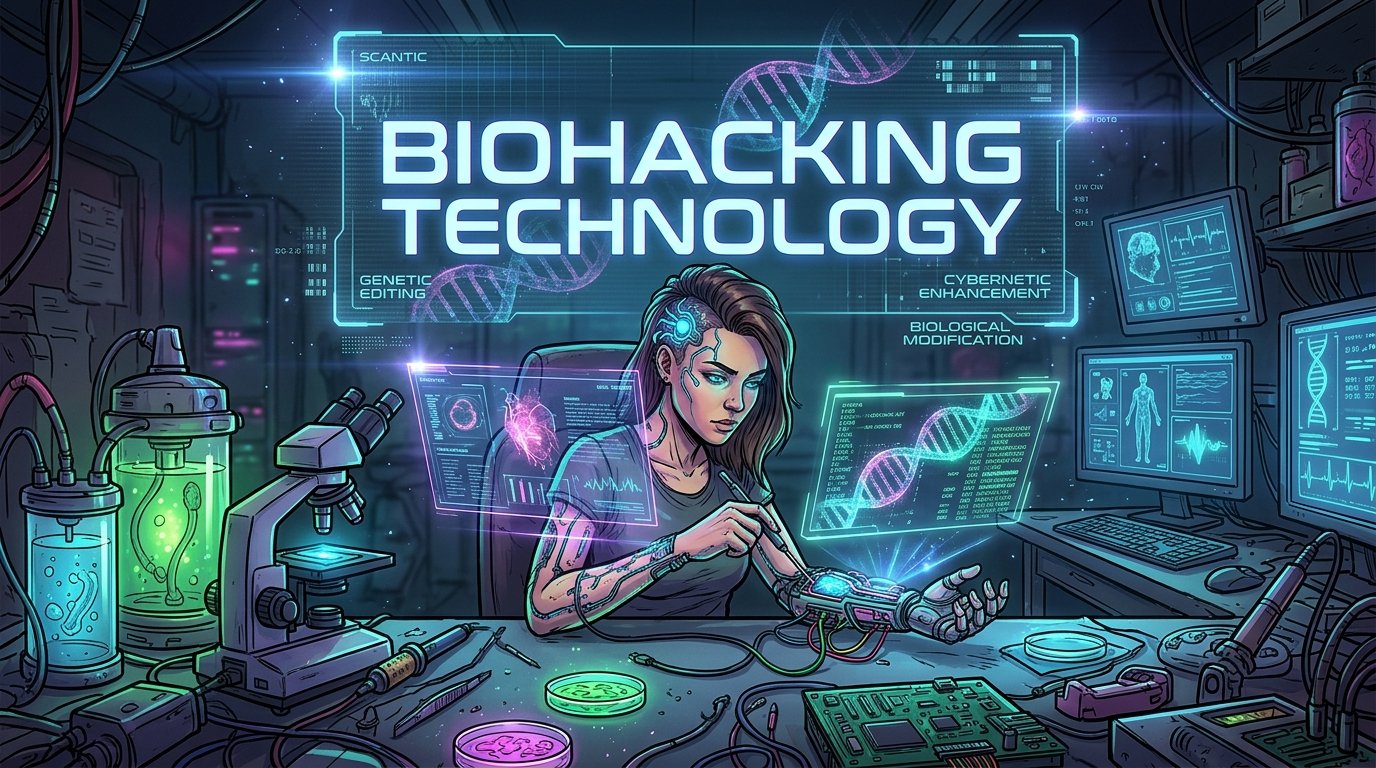
Biohacking technology describes tools, devices, software, and technical methods used to monitor, analyze, or attempt to influence biological processes in humans or other living organisms.
The term combines biohacking, which generally means experimenting with biology or personal habits to improve or better understand a biological system, and technology, which refers to equipment, software, instruments, and technical processes.
In everyday life, biohacking technology may involve using a smartwatch to monitor activity, an app to track sleep, or a continuous glucose monitor to observe glucose patterns when medically appropriate. In research settings, the term may also relate to genetic engineering tools, laboratory equipment, and other technologies used to study biological systems.
The phrase does not describe one specific device or treatment. Instead, it covers a broad range of approaches that differ in complexity, purpose, cost, and scientific reliability.
Biohacking Technology Meaning in Simple Words
In simple terms, biohacking technology means using technology to learn about the body or try to improve how it functions.
For example, a person might wear a fitness tracker to understand their daily activity, record sleep patterns with a smart ring, and use the information to adjust their bedtime or exercise routine.
The technology provides information, but it does not automatically improve health. The results depend on the accuracy of the tools, the choices a person makes, and whether those choices are supported by reliable evidence.
How Does Biohacking Technology Work?
Biohacking technology works in different ways depending on the tool and its intended purpose. Many consumer technologies follow a similar process: collect information, analyze patterns, and use the findings to guide decisions.
1. Collecting Biological Data
Devices may gather information such as movement, heart rate, skin temperature, sleep patterns, or blood glucose levels. The type of data depends on the sensors and technology involved.
A smartwatch, for example, can estimate activity levels and measure heart rate using optical sensors. A medical glucose monitor measures glucose through a different method and has a more specific health-related purpose.
2. Analyzing Patterns
Apps and software organize collected information into charts, summaries, and trends. Some tools use algorithms to estimate sleep stages, calculate training loads, or identify changes in measured values.
These results are estimates, not always direct measurements of the biological process a device claims to represent. Accuracy can vary between devices and individuals.
3. Adjusting Habits or Routines
Users may apply the information to everyday decisions, such as changing exercise intensity, setting a regular sleep schedule, or reviewing dietary habits.
For example, someone who notices that late-night caffeine is associated with poorer sleep may decide to avoid caffeine later in the day and observe whether sleep improves.
4. Reviewing the Results
People may compare data over time to see whether a change appears helpful. Reliable evaluation requires looking at longer-term patterns rather than reacting to every daily fluctuation.
For health concerns, consumer data should not replace professional assessment or medically recommended testing.
Types of Biohacking Technology
Biohacking technology includes several categories. Some are widely available to consumers, while others are primarily used in medical or scientific settings.
1. Wearable Health Trackers
<AsyncImage query=”smartwatch fitness tracker displaying heart rate steps and health metrics on wrist” aspectRatio=”16:9″ width=”100%” />
Wearable devices are among the most familiar examples of biohacking technology. They include smartwatches, fitness bands, smart rings, and other sensors worn on the body.
Depending on the device, they may track:
Daily steps and movement
Heart rate
Exercise duration and intensity
Estimated sleep patterns
Skin temperature trends
Some measures related to recovery or physical strain
These devices can help users recognize patterns in their activity and routines. However, consumer wearables do not measure every aspect of health accurately, and their estimates should not be treated as medical diagnoses.
2. Sleep-Tracking Technology
<AsyncImage query=”smart ring and smartphone sleep tracking app showing sleep duration and sleep stages on bedside table” aspectRatio=”16:9″ width=”100%” />
Sleep technology includes smart rings, watches, bedside sensors, and mobile applications designed to estimate sleep duration, timing, and patterns.
People may use these tools to establish consistent sleep schedules or identify habits that appear to affect rest.
For example, a user may discover that their sleep duration tends to decrease on nights when they work late. They can use this observation to adjust their schedule.
Most consumer sleep trackers estimate sleep stages indirectly. They cannot provide the same information as a clinical sleep study, and their scores should not create unnecessary anxiety about normal variations in sleep.
3. Nutrition and Diet-Tracking Apps
<AsyncImage query=”nutrition tracking app on smartphone showing meal logging food portions and daily nutrient information” aspectRatio=”16:9″ width=”100%” />
Nutrition apps help users record meals, estimate nutrient intake, monitor hydration, or identify eating patterns.
Some people use them to understand their food choices, support sports training, or follow nutrition plans developed with a qualified professional.
These apps may be useful for general awareness, but their calculations can be inaccurate when serving sizes, ingredients, or food entries are incomplete. Strict tracking may also be unhelpful for people who find food monitoring stressful or develop an unhealthy relationship with eating.
4. Continuous Glucose Monitoring
<AsyncImage query=”continuous glucose monitoring sensor worn on upper arm with glucose trend displayed on smartphone screen” aspectRatio=”16:9″ width=”100%” />
Continuous glucose monitors, commonly called CGMs, measure glucose levels in fluid beneath the skin and display changing patterns over time.
These devices have established medical uses, especially in diabetes management. Some non-diabetic consumers also explore glucose tracking as part of personal health experimentation, but the benefits and appropriate interpretation of such use are less clear.
Glucose naturally changes throughout the day. A single reading does not automatically indicate a health problem, and consumer interpretations of glucose data can be misleading. People should use these devices according to medical advice and avoid making major dietary or treatment changes based solely on app alerts.
5. Brain-Training and Neurotechnology Tools
<AsyncImage query=”noninvasive EEG neurofeedback headset with computer displaying brainwave activity in research setting” aspectRatio=”16:9″ width=”100%” />
Some biohacking approaches involve technologies designed to measure or interact with aspects of brain activity. Examples include electroencephalography (EEG) devices, certain neurofeedback systems, and cognitive training software.
Depending on the technology, these tools may be used in research, clinical applications, or consumer wellness products.
It is important to distinguish between measuring a signal and proving that a product can improve intelligence, memory, attention, or emotional health. Claims about consumer brain-training products vary in quality, and evidence for one use does not necessarily establish benefits for another.
6. Genetic and Biotechnology Tools
<AsyncImage query=”scientific biotechnology laboratory with DNA sequencing equipment and researcher examining genetic data on monitor” aspectRatio=”16:9″ width=”100%” />
In scientific and specialized settings, biohacking technology may include DNA analysis, genetic research tools, laboratory instruments, and technologies used to study or modify biological systems.
Examples include:
DNA sequencing and analysis tools
Laboratory equipment for studying cells
Genetic testing technologies
Gene-editing tools used in controlled research
Software for analyzing biological data
These technologies are more complex than ordinary fitness tracking. Genetic information can be difficult to interpret, and gene-editing methods can carry significant safety, ethical, and legal concerns. Genetic modification should not be treated as a casual personal wellness experiment.
Common Examples of Biohacking Technology in Everyday Life
Biohacking does not always involve advanced laboratory equipment. Many people encounter it through ordinary consumer technology.
Example 1: Using a Smartwatch to Monitor Exercise
A person wears a smartwatch during daily walks and workouts. They review their activity trends and gradually build a more consistent exercise routine.
The watch supports awareness and planning, while the actual benefits come from appropriate activity and sustainable habits.
Example 2: Improving Sleep Habits With a Smart Ring
Someone uses a smart ring to estimate sleep duration and notices that their sleep schedule varies considerably throughout the week.
They decide to maintain a more consistent bedtime and evaluate how they feel over time. The device provides context, but it cannot guarantee better sleep by itself.
Example 3: Recording Food and Nutrition
A person logs meals in a nutrition app to understand their usual eating patterns. The information helps them identify whether they regularly miss meals or consume less dietary variety than intended.
The app is a tracking tool, not a substitute for individualized nutrition advice when a medical condition or special dietary need is involved.
Example 4: Reviewing Glucose Trends Under Medical Guidance
A person with diabetes uses a continuous glucose monitor to observe how glucose changes throughout the day. They discuss the patterns with their healthcare professional to guide appropriate treatment decisions.
This is an example of technology supporting established medical care rather than replacing it.
Example 5: Using Light and Environment Controls
Someone uses a smart lighting system to make their environment brighter during the day and dimmer in the evening. They combine this with a consistent sleep schedule to support their daily routine.
The technology changes the environment rather than directly modifying the body, but it can still be part of a broader approach to personal well-being.
What Are the Benefits of Biohacking Technology?
Biohacking technology can offer practical benefits when the tools are appropriate, the measurements are understood correctly, and the results are used sensibly.
Better Awareness of Personal Habits
Tracking tools can reveal patterns that are difficult to notice from memory alone. A person may become more aware of activity levels, sleep timing, or how their routine changes during busy periods.
More Informed Decisions
Useful data can help people ask better questions about their habits and discuss relevant observations with qualified health professionals.
For instance, a record of symptoms and sleep patterns may help someone explain their experiences during a medical appointment.
Support for Fitness Goals
Wearables can help users monitor exercise frequency, activity duration, and progress toward realistic goals. This may make it easier to maintain a routine or adjust training.
Greater Personal Engagement
Some people find that seeing progress in an app motivates them to walk more, follow a consistent schedule, or pay closer attention to recovery.
However, motivation differs from person to person, and constant monitoring is not necessary for everyone.
Useful Data for Research
In controlled research settings, biological sensors and analytical technologies can help scientists study patterns and test hypotheses. The value of these tools depends on study design, data quality, and appropriate interpretation.
Risks and Limitations of Biohacking Technology
Despite its potential benefits, biohacking technology has important limitations. Collecting more data does not always lead to better decisions.
Inaccurate or Misleading Measurements
Consumer devices may estimate biological measures rather than directly measure them. Results can vary with sensor quality, device placement, movement, skin characteristics, and the algorithms used.
A change in a device’s score does not necessarily mean that the body has experienced a meaningful health change.
Unsupported Health Claims
Some products promise to increase energy, optimize hormones, improve brain function, or slow aging without strong evidence supporting those claims.
Marketing language such as optimization or peak performance does not establish that a method works. Look for well-designed research and credible medical guidance before relying on a product.
Privacy and Data Security
Health apps and wearable devices may collect sensitive information about activity, sleep, location, or other personal patterns. Their privacy practices differ.
Before using a product, review its data-sharing policies, security options, account permissions, and whether information may be shared with third parties.
Excessive Monitoring
Constantly checking sleep scores, heart rate, or other metrics can cause some users to become unnecessarily worried about ordinary fluctuations.
Technology should support a person’s well-being rather than make daily life revolve around numerical targets.
Physical and Medical Risks
Some experimental biohacking practices involve supplements, unregulated devices, extreme routines, or interventions that can cause harm. Genetic modification and other advanced biological experiments carry additional technical and ethical concerns.
Avoid invasive procedures or unproven treatments outside appropriate professional and legal safeguards.
Biohacking Technology vs. Traditional Healthcare
Biohacking technology and traditional healthcare can overlap, but they serve different roles.
Traditional healthcare focuses on preventing, diagnosing, and treating health conditions through established clinical methods. Biohacking is a broad term for personal experimentation and technology-assisted efforts to understand or influence biological processes.
| Feature | Biohacking Technology | Traditional Healthcare |
|---|---|---|
| Main focus | Personal monitoring, experimentation, or performance goals | Prevention, diagnosis, treatment, and ongoing care |
| Common tools | Wearables, wellness apps, personal tracking systems | Clinical tests, medical devices, examinations, and treatment tools |
| Oversight | May be self-directed or professionally guided | Usually involves qualified healthcare professionals |
| Evidence | Varies substantially by method | Clinical decisions generally rely on established evidence and standards |
| Main limitation | Data can be misinterpreted or claims may be unproven | Access, cost, and individual treatment needs can vary |
These categories are not mutually exclusive. A clinician may recommend a wearable or glucose monitor as part of a care plan. The important distinction is whether a tool is being used appropriately and whether its results are interpreted within a reliable medical framework.
Is Biohacking Technology Safe?
The safety of biohacking technology depends on the specific tool, how it is used, and the person’s circumstances.
Ordinary activity tracking is generally low risk for many users, although it can raise privacy concerns or encourage excessive monitoring. Medical devices have specific instructions and limitations, while experimental biological interventions may pose much greater risks.
Before trying a biohacking method, consider the following:
Check whether the product has credible scientific evidence for its intended purpose.
Understand what the device measures and what it only estimates.
Review privacy settings and data-sharing practices.
Avoid changing prescribed treatment based on consumer app results.
Consult a qualified healthcare professional about medical devices, supplements, or interventions that could affect your health.
Be cautious of products that promise dramatic results without reliable supporting evidence.
A useful approach to biohacking prioritizes safety, realistic expectations, and measurable benefits rather than novelty alone.
Who Uses Biohacking Technology?
Biohacking technology attracts people with different interests and goals.
Fitness Enthusiasts and Athletes
Athletes may use wearables and training software to monitor workouts, recovery patterns, and performance trends. These tools can support planning, but they do not replace appropriate training, rest, or professional coaching.
People Interested in Wellness
Some people use sleep trackers, nutrition apps, and activity monitors to understand daily routines and make gradual lifestyle changes.
Researchers and Biotechnology Professionals
Scientists use advanced tools to study cells, genes, biological processes, and other research questions. Their work typically requires specialized training, laboratory controls, and ethical oversight.
Technology Enthusiasts
Some users enjoy experimenting with new devices and analyzing personal data. Responsible experimentation means understanding the limits of the technology and avoiding methods that could create unnecessary risks.

Synonyms and Related Terms for Biohacking Technology
The following terms overlap with biohacking technology, but they are not exact synonyms in every context.
| Term | Meaning |
|---|---|
| Human performance technology | Tools intended to measure or support physical or cognitive performance |
| Health-tracking technology | Devices and apps used to monitor health-related information |
| Wearable health technology | Electronic devices worn on the body to collect or display data |
| Personal health monitoring | Tracking personal health indicators or habits over time |
| Digital health | The use of digital tools and technologies to support health services and health-related activities |
| Quantified self | Using personal data to understand habits, behavior, or biological patterns |
| Biotechnology | Technology that uses biological systems, organisms, or processes |
| Neurotechnology | Technologies designed to measure, influence, or interact with nervous system activity |
| Precision health | Approaches that consider individual differences and relevant data in health decisions |
| Self-experimentation | Testing changes or methods on oneself, which can range from low-risk habit tracking to unsafe practices |
The closest term depends on the context. A smartwatch is an example of wearable health technology, while gene-editing tools belong to biotechnology and are not equivalent to everyday health tracking.